
In this article
In this article
- What Is Myfooddepot.com?
- The Story Behind Food Depot
- How the “Cost Plus 10%” Model Works
- What Myfooddepot.com Publishes: Weekly Ads and Deals
- Departments and Products You Can Find
- Digital Coupons, Rewards, and the Food Depot App
- Store Locator and Other Shopping Tools
- Is Myfooddepot.com Legit?
- Pros and Cons of Shopping at Food Depot
- How Food Depot Compares to Other Grocery Chains
- Frequently Asked Questions
- Conclusion
If you live anywhere in Georgia and keep an eye on your grocery bill, there is a good chance the name Food Depot has crossed your radar. The company’s official website, myfooddepot.com, is where shoppers go to browse weekly ads, clip digital coupons, and find store locations. But what exactly is the site, what does it publish, and can you trust it? This guide breaks everything down in plain terms.
What Is Myfooddepot.com?
Myfooddepot.com is the official online home of Food Depot, an employee-owned grocery store chain based in Stockbridge, Georgia. The site belongs to All American Quality Foods, Inc., the parent company that runs the Food Depot stores. Rather than being an online shop where you order groceries for delivery, the website works as a companion to the physical stores: it publishes the weekly ad circular, hosts the store locator, and connects shoppers with the chain’s digital coupons, rewards program, and mobile app.
Think of it as the front door to everything Food Depot offers beyond its shelves. New visitors usually land on the site to check that week’s deals — the famous “Cost Plus 10%” pricing model means the weekly ad is where the real savings live, and myfooddepot.com is the easiest place to see them without driving to the store first.
The site is aimed squarely at budget-conscious families in Georgia who shop in person. You won’t find online ordering or curbside pickup highlighted here; instead, the emphasis is on in-store savings tools. That focus tells you a lot about who the chain serves: people who like to plan their grocery run around the week’s best prices and aren’t interested in paying a premium for convenience.
The Story Behind Food Depot
Food Depot did not start out with that name. The story begins in 1975, when Gerald Taylor and Raymond Johnson purchased their first supermarket in Stockbridge, Georgia — a store that had been operating as Kenney’s Market. The two friends took a genuine risk on the venture, and the business grew under the name Quality.
The Food Depot name and concept arrived in late 1988. By then, the company had learned a thing or two about competing with the big national chains: you don’t beat them by copying them, you beat them by doing something different. Food Depot’s difference was a stripped-down, no-frills shopping experience built around transparent pricing — a philosophy that survives today in the Cost Plus 10% model.
From that single Stockbridge store, the company expanded across the greater Atlanta area and wider Georgia, growing into a chain of roughly 25 stores. Through all of that growth, one thing has stayed constant: Food Depot remains an employee-owned business. That ownership structure matters to a lot of shoppers, because it means the people stocking the shelves and ringing up your groceries have a direct stake in the company’s success. Reviews from employees frequently mention the sense of community inside the stores — customers know each other by name in some locations, and that small-town grocery feel is hard to manufacture.
How the “Cost Plus 10%” Model Works
If you only learn one thing about Food Depot, make it this: the Cost Plus 10% pricing system. It is the single biggest reason people shop there, and it confuses newcomers more than almost anything else in grocery retail.
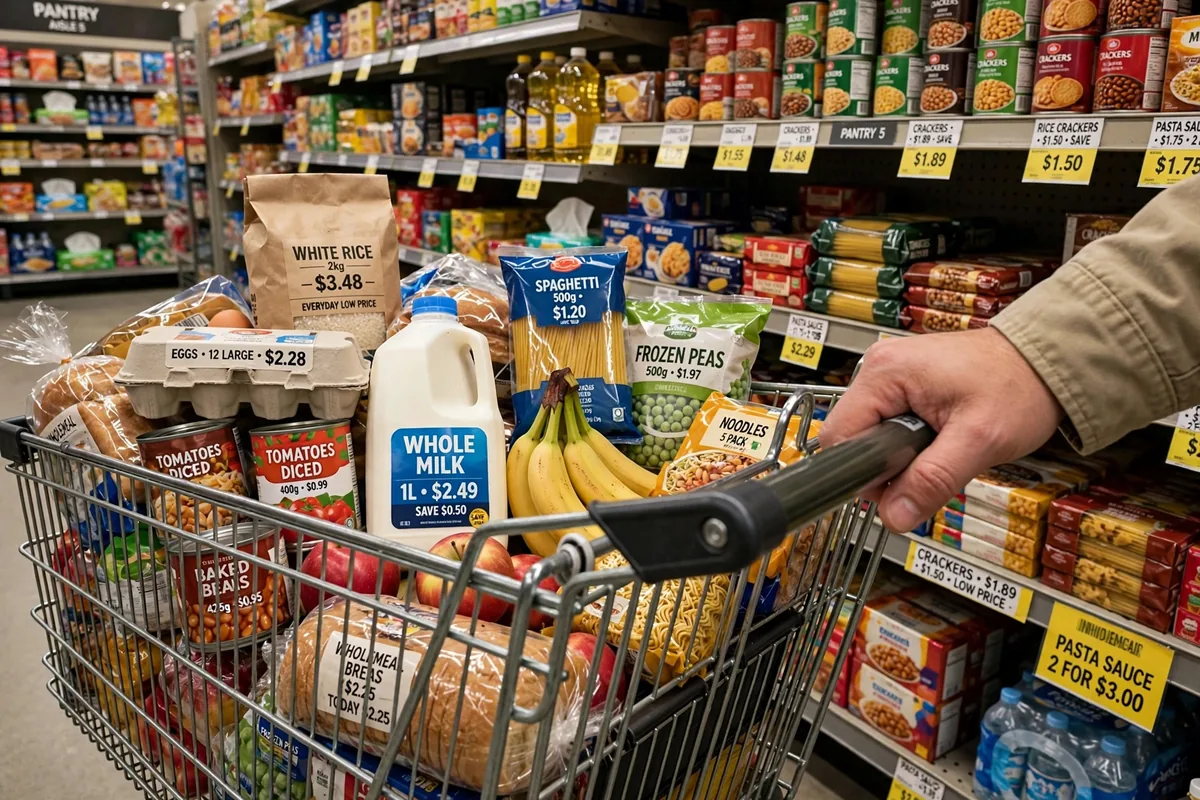
Here is how it works in practice. The price you see on the shelf tag is essentially the store’s cost to get that item — not a marked-up retail price like you would see at most supermarkets. When you get to the register, 10% is added to your total. That 10% covers the store’s operating costs and its profit margin. So if your cart rings up at $100 in shelf prices, you pay $110 at checkout.
Most grocery stores hide their margins by marking individual items up 30%, 40%, or even 50% before you ever see them. Food Depot simply puts the math in the open. The result is that everyday staples — flour, sugar, canned goods, ground beef — are almost impossible to beat on price. On a full week’s worth of groceries for a family, the savings add up fast.
There are a couple of honest caveats worth knowing. First, on big-ticket or brand-name items where the margin was already thin, the gap between Food Depot and a sale price elsewhere can be smaller. Second, the 10% surcharge means you need to do your mental math with the final total in mind, not the shelf tags. But for shoppers who cook at home and buy in volume, the model is genuinely hard to argue with — as The Modern Post has covered in its own business reporting, regional chains that stay transparent about pricing tend to keep loyal customers.
What Myfooddepot.com Publishes: Weekly Ads and Deals
The heart of myfooddepot.com is its weekly ad circular. Like most grocery chains, Food Depot publishes a fresh set of deals each week, and the site is the official place to see them. The ads run department by department — meat, produce, dairy, frozen, bakery, deli, and grocery staples — with prices that change weekly.
What makes the weekly ad worth checking, rather than just skimming, is how the Cost Plus 10% model interacts with the deals. Because the starting prices are already near cost, a weekly ad price on chicken breast or ground beef at Food Depot can undercut sale prices at national chains. Shoppers who plan meals around the ad tend to save the most.
Beyond the weekly ad, the site publishes the product catalog, which lets you browse what the stores carry, and highlights in-store specials and special display deals that may not appear in the printed circular. There are also recurring promotions tied to the rewards program and digital coupons, which brings us to the digital side of the site.
One thing the site does not publish: online grocery prices for delivery or pickup. Food Depot remains a firmly in-store experience, and the website reflects that. The deals you see on myfooddepot.com are prices you take advantage of by walking through the door.
Departments and Products You Can Find
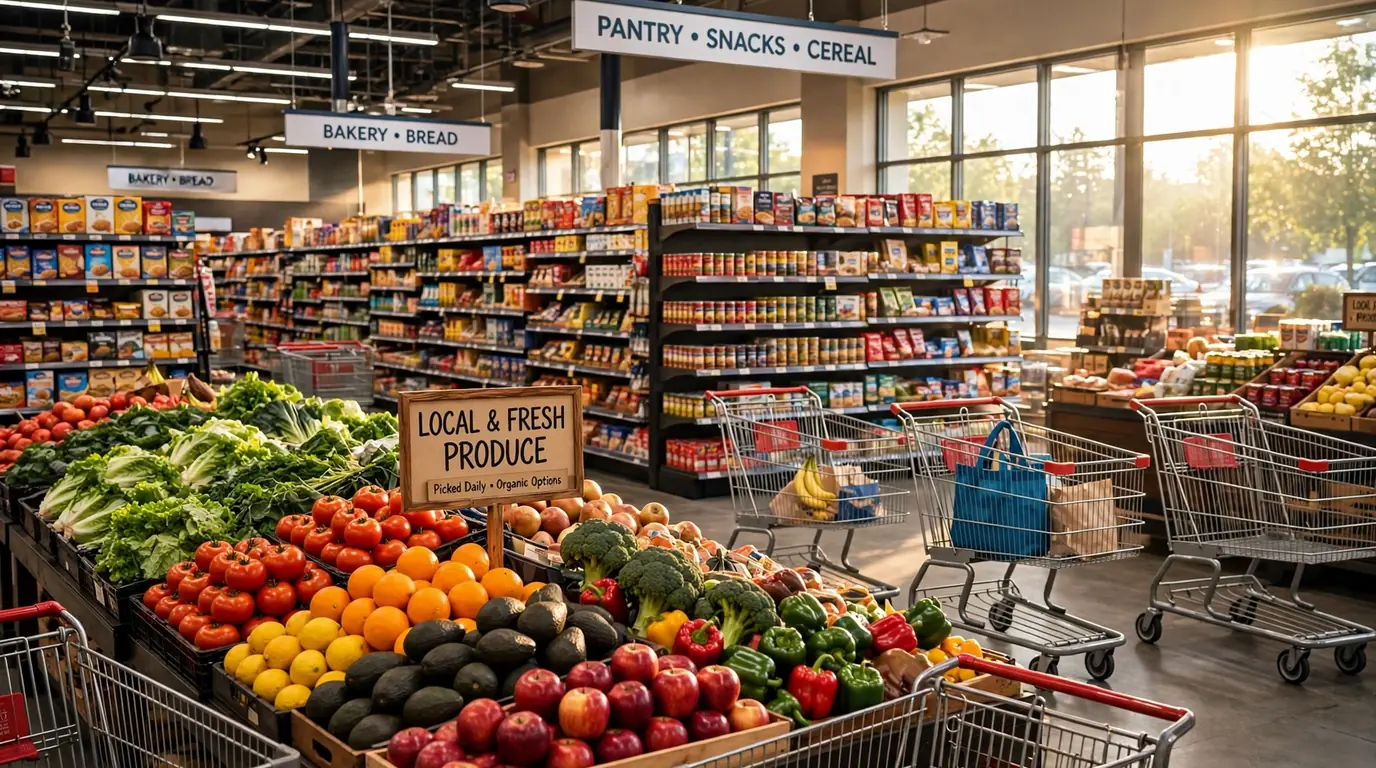
Food Depot stores carry everything a family needs for a full grocery run. The company describes its stores as friendly, clean, and well-organized, with fresh meat and produce arriving every day. The departments will feel familiar to anyone who shops at a conventional supermarket:
- Meat and seafood — fresh cuts are a headline category in the weekly ads, with prices that are often the chain’s strongest draw.
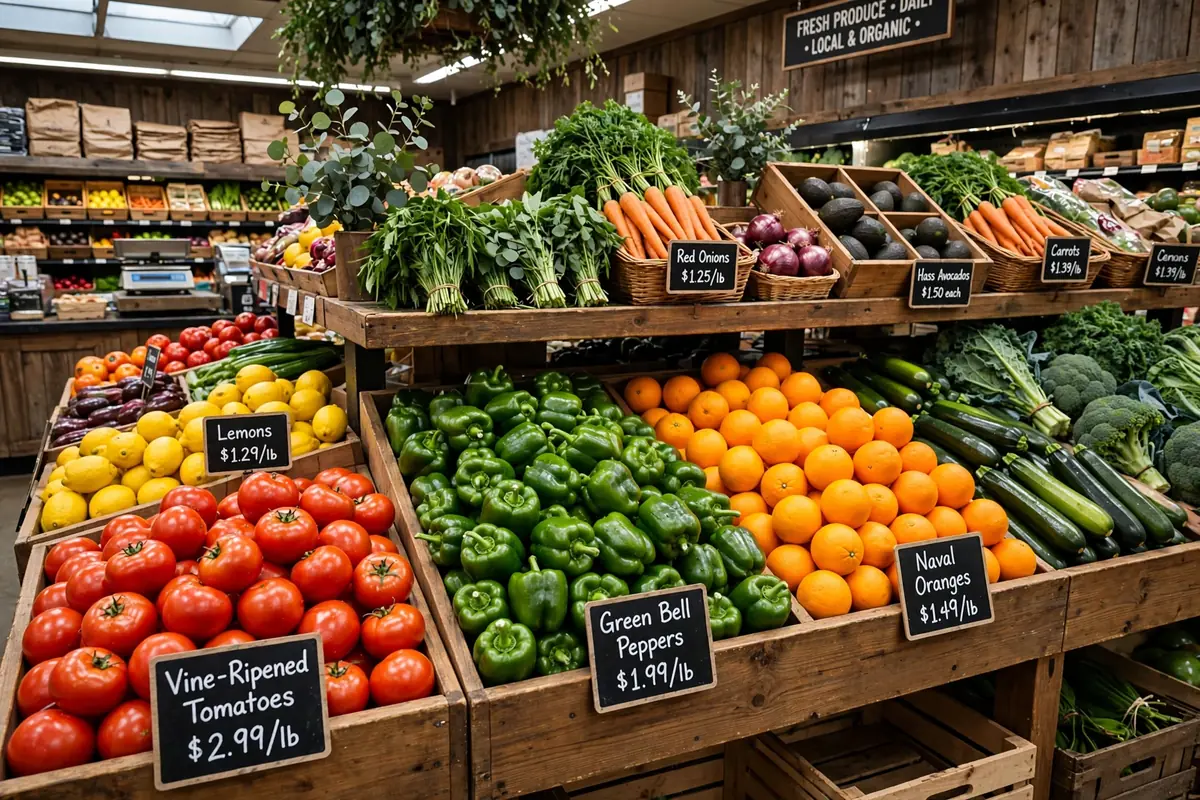
- Produce — everyday fresh fruits and vegetables, with ad features that rotate by season.
- Dairy and frozen — standard assortment at warehouse-style value pricing.
- Grocery staples — flour, sugar, rice, canned goods, and pantry basics where the Cost Plus 10% model shines brightest.
- Bakery and deli — fresh baked goods and prepared options round out the store.
The stores deliberately skip the extras that drive up overhead at bigger chains — there is no pharmacy counter, no massive general-merchandise section, no in-store restaurant. What you get instead is a no-frills layout where the savings show up on your receipt. For households that buy in volume, that trade is an easy yes. Readers of Daily Orvix will recognize the pattern: the discounters that strip out the extras usually win on price.
Digital Coupons, Rewards, and the Food Depot App
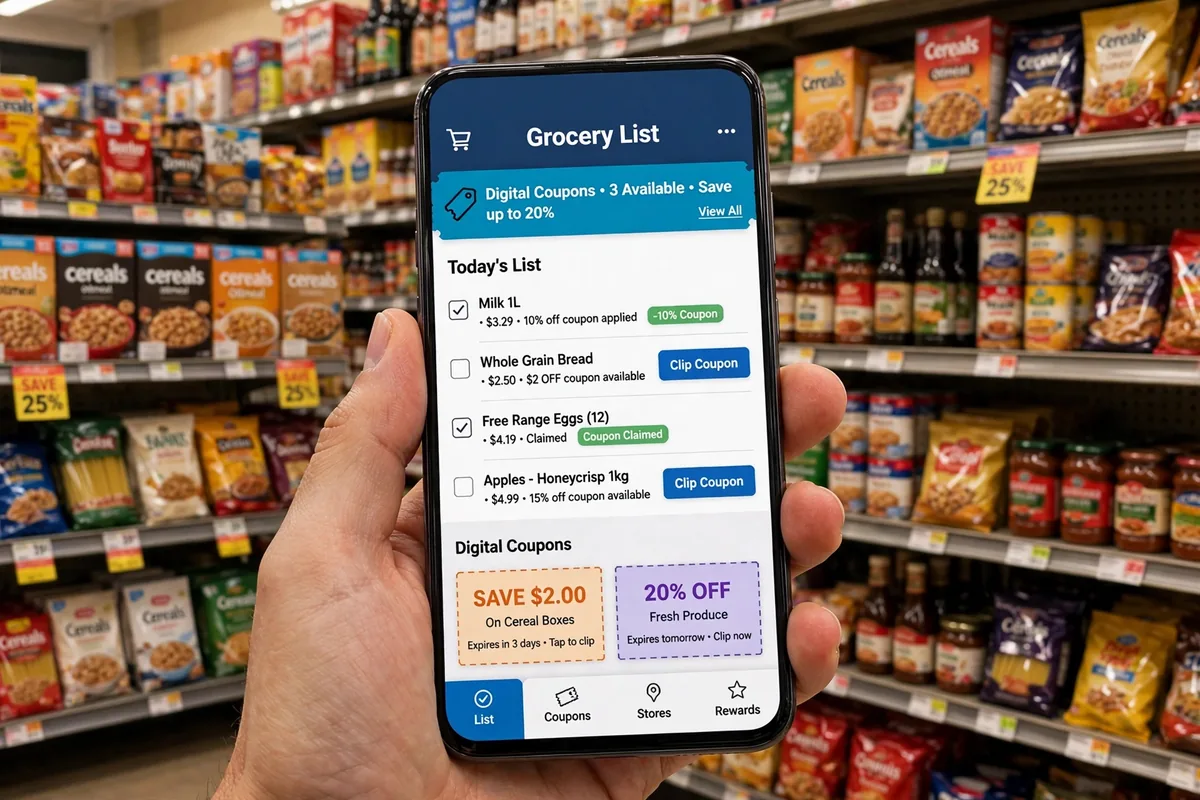
The digital side of Food Depot has grown up considerably. The official Food Depot app, developed by All American Quality Foods, Inc., gives shoppers a set of tools that make the in-store trip cheaper and easier:
- Earn rewards — build up rewards on your regular shopping.
- Clip digital coupons — no paper clipping required; the coupons apply at checkout.
- Scan product barcodes — scan an item in the aisle to see whether a coupon or offer applies.
- Browse the product catalog — search what’s on the shelves before you go.
- View the weekly ad for your store — see the current deals tied to your location.
- Find your closest store — store finder built in.
The app is free, holds a rating in the mid-4s from tens of thousands of downloads, and has been updated steadily. It is not a delivery or ordering app — everything it does is designed to make the in-store trip better. Clip the coupons at home, scan while you shop, and watch the rewards add up. For regular Food Depot shoppers, it is close to essential.
If you would rather not install the app, myfooddepot.com itself gives you access to the weekly ads and store information through any browser. The app is the richer experience, but the website covers the basics for anyone who just wants to check prices.
Store Locator and Other Shopping Tools
Food Depot’s stores are concentrated in Georgia, mainly around the greater Atlanta area. If you’re wondering whether there’s a location near you, the store finder on myfooddepot.com is the official way to check. You can search by area and get details for your nearest store.
Because the chain is regional rather than national, the site’s shopping tools are built around local store information — your store’s weekly ad, its hours, and its location. Shoppers new to the chain should double-check which location their weekly ad applies to, since featured deals are organized by store.
A practical tip: the first time you shop at Food Depot, keep your first receipt and do the comparison against what the same basket would have cost at your old store. That one receipt tends to convert people faster than any explanation of the pricing model.
Is Myfooddepot.com Legit?
Yes — myfooddepot.com is the legitimate, official website of a real, established grocery chain. A few markers make this easy to verify:
- Long operating history: the company dates to 1975, and the Food Depot name to 1988. Fly-by-night operations don’t survive five decades.
- Real parent company: All American Quality Foods, Inc., headquartered in Stockbridge, Georgia, is the documented operator.
- Physical footprint: around 25 stores across Georgia — a verifiable, bricks-and-mortar business.
- Employee-owned: the company is owned by its employees, a structure that is publicly associated with the brand.
- Official app: the Food Depot app is published by the parent company on the major app stores with tens of thousands of downloads.
As always, the safe way to reach the real site is to type the address yourself rather than clicking links in random emails or social media posts offering “Food Depot gift cards.” The company is well known enough that its name occasionally gets used in phishing attempts — the real weekly ads live on myfooddepot.com, not in a text message from a stranger.
Pros and Cons of Shopping at Food Depot
Where Food Depot wins:
- Transparent Cost Plus 10% pricing with genuinely low everyday prices on staples.
- Strong weekly ads, especially on meat and produce.
- Digital coupons and a rewards program that stack on top of the low shelf prices.
- Employee-owned company with a community feel in many locations.
- No-frills stores that keep overhead — and therefore your total — down.
Where it falls short:
- Regional only — if you don’t live in Georgia, it can’t help you.
- No online ordering, delivery, or curbside pickup.
- The 10% checkout surcharge surprises first-timers and requires mental math.
- No-frills means fewer departments and services than a superstore.
- Employee reviews suggest pay and benefits are average rather than exceptional — relevant if you’re job-hunting rather than shopping.
How Food Depot Compares to Other Grocery Chains
Food Depot occupies a specific lane in American grocery: the hard-discount, warehouse-style grocer. Its closest national relatives are chains like Aldi and Save A Lot — stores that trade fancy fixtures for lower prices. Where Food Depot differs is the Cost Plus 10% transparency. Aldi keeps prices low through private labels and tiny assortments; Food Depot keeps them low by showing you its math.
Against conventional supermarkets — your Krogers, Publixes, and the like — Food Depot usually wins on price but loses on selection breadth and store services. Against warehouse clubs like Costco, the comparison depends on your household: warehouse clubs require a membership fee and push bulk buying hard, while Food Depot charges nothing to walk in and lets you buy exactly what you need.
The honest verdict: for a Georgia family that cooks most meals at home and doesn’t mind a no-frills store, Food Depot is one of the strongest values in the state. For shoppers who want one-stop everything — pharmacy, hot bar, general merchandise — a conventional supermarket still fits better.
Frequently Asked Questions
What is myfooddepot.com?
It is the official website of Food Depot, the employee-owned grocery chain in Georgia run by All American Quality Foods, Inc. The site publishes weekly ads, hosts a store locator, and links to the chain’s digital coupons and rewards app.
How does the Cost Plus 10% pricing work?
Shelf prices reflect the store’s approximate cost. At checkout, 10% is added to your total to cover operating costs and profit. A $100 basket in shelf prices costs $110 at the register.
Where are Food Depot stores located?
In Georgia, concentrated around the greater Atlanta area. The store finder on myfooddepot.com shows the full list of locations.
Does Food Depot offer online ordering or delivery?
No. Food Depot is an in-store shopping experience. The website and app help you plan your trip and save money in the store, but you can’t order groceries for delivery.
Is the Food Depot app free?
Yes. The official app is free to download and includes rewards, digital coupons, barcode scanning, the product catalog, weekly ads, and a store finder.
Is myfooddepot.com legit?
Yes. It is the official site of a grocery chain operating since 1975 under the Food Depot name since 1988, with about 25 stores in Georgia. Always navigate to it directly rather than following unsolicited links.
Conclusion
Myfooddepot.com is a straightforward site for a straightforward business: a Georgia grocery chain that has spent nearly four decades selling food at near-wholesale prices plus a flat 10%. The weekly ads are the reason most people visit, the digital coupons and rewards app are the reason they keep coming back, and the employee-owned structure is the reason the stores feel different from the big national chains. If you live in Georgia and buy groceries like a normal family, it is absolutely worth a visit — both the website and the store.
Read Also: Here Comes the Boom: 2012 Movie Guide (2026)

Admin
Contributor at Daily Scope 67.
Related reading

ConnectionCafe.com: What It Is, What It Offers, and Is It Worth Your Time? (2026)
ConnectionCafe.com: What It Is, What It Offers, and Is It Worth Your Time? If you typed “connectioncafe.com” into Google, you probably saw a site promising tech…
Read story
Fentomagazine.com USA: What It Is, What It Offers & How to Use It (2026 Guide)
Fentomagazine.com USA: What It Is, What It Offers, and How to Use It If you typed “fentomagazine.com usa” into Google, you were probably looking for a…
Read story
Pete Musser: The Visionary Entrepreneur Who Transformed Cable Television and Built a Business Empire
Pete Musser: The Visionary Entrepreneur Who Transformed Cable Television When you think about the cable television industry, most people probably don’t immediately picture Pete Musser as…
Read story
1 comment