
In this article
In this article
- What Is Mynutrition.com?
- The “My Nutrition” Name: Several Different Entities
- What Mynutrition.com Publishes
- Nutrition Tracking and Meal Planning Tools
- Healthy Eating Basics the Site Covers
- Who the Site Is For
- How to Evaluate Any Nutrition Website
- Is Mynutrition.com Legit?
- Pros and Cons
- Alternatives Worth Knowing
- Frequently Asked Questions
- Conclusion
Type mynutrition.com into a search bar and you’ll find yourself in the busy world of online nutrition content — articles about healthy eating, meal planning guides, and diet tools. But what exactly is the site behind the name, what does it publish, and can you trust what it says? This guide gives you the straight answer, including one important caveat about the “My Nutrition” name itself.
What Is Mynutrition.com?
Mynutrition.com is a nutrition-focused website operating in the health and wellness space. Like many sites in this category, it presents itself as a resource for people who want to eat better — covering topics such as balanced meals, healthy recipes, nutrition basics, and practical diet guidance.
Here’s the honest part up front: unlike a grocery chain or a mortgage lender, a nutrition content site doesn’t always have a widely documented corporate backstory, and publicly available records for the exact operator of mynutrition.com are limited. What we can say with confidence is what the site is about — nutrition information and healthy-eating content — and the sections below explain what that typically includes and how to judge whether any site in this space deserves your trust.
If you landed on the site looking for meal ideas, calorie guidance, or help building healthier habits, the content is aimed at you. The sections below walk through what such sites publish, the tools they offer, and the red flags to watch for.
The “My Nutrition” Name: Several Different Entities
One reason the domain can be confusing is that several unrelated organizations use the name “My Nutrition” or close variants. Knowing which is which saves you from mixing them up:
- MyNutrition (Exeter, UK) — a local meal-prep and delivery service founded in 2018 that provides high-protein meals to individuals and has partnered with Exeter City Football Club’s academy to supply players’ meals. Its web presence is at a different domain.
- myNutrition at Washington State University — an educational website (mynutrition.wsu.edu) developed by the university’s Dining Services and a registered dietitian, covering nutrition basics, healthy living, BMI and calorie calculators, and weekly challenges for the campus community.
- mynutrition.in (India) — described at its launch as one of India’s first health and nutrition web portals, offering personalized consultation packages, fitness consultant access, diet plans, and nutrition articles.
- MyNutrition at Charlestown — a menu and nutrition-label tool used by a retirement community’s dining program to help residents filter meals by allergens and dietary preferences.
These are separate organizations — they share a name, not an owner. When evaluating mynutrition.com specifically, judge it on its own content and transparency, not on what one of these other entities does.

What Mynutrition.com Publishes
Nutrition websites in this space typically publish a mix of the following content, and mynutrition.com fits this pattern:
- Nutrition explainers — articles breaking down macronutrients (protein, carbohydrates, fats), micronutrients (vitamins and minerals), and what they actually do in your body.
- Healthy recipes and meal ideas — practical, everyday cooking guidance aimed at people who want to eat better without complicated diet plans.
- Diet and lifestyle guides — coverage of popular eating approaches (balanced eating, high-protein plans, plant-based options) with pros, cons, and who they suit.
- Wellness content — the overlap of nutrition with fitness, energy, sleep, and general well-being.
The best sites in this category keep the tone practical rather than preachy: what to eat, why it matters, and how to make it fit a real schedule. When a nutrition site starts making miracle claims — “lose 10 pounds in a week” or “this one food cures everything” — that’s your signal to leave.
Nutrition Tracking and Meal Planning Tools
Many nutrition sites go beyond articles and offer interactive tools. The common ones include:
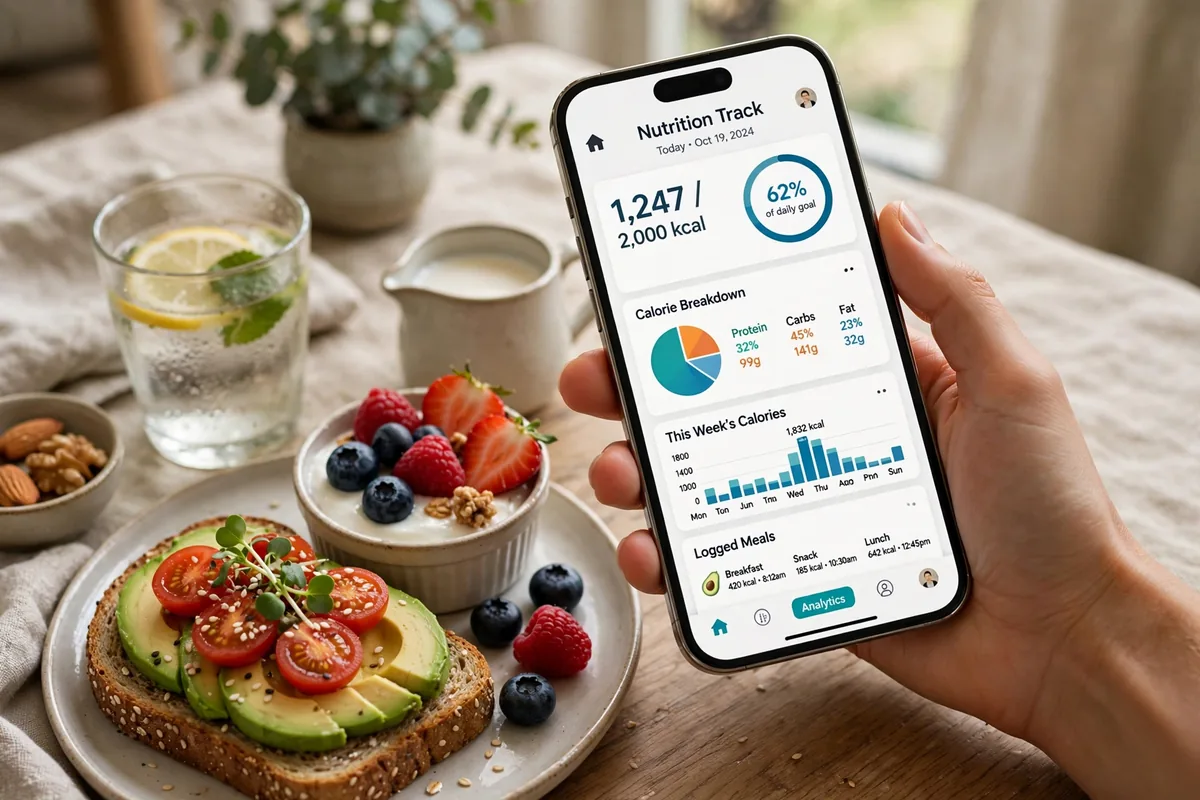
- Food diaries and calorie counters — log what you eat and see the calorie and nutrient totals. Apps in this space typically offer free basic logging with premium features (custom recipes, family profiles, advanced analytics) as paid upgrades.
- Meal planners — weekly plans with shopping lists and calorie-counted recipes, often designed by nutritionists.
- Nutrient calculators — BMI, daily calorie needs, and target-weight estimators based on age, sex, height, and activity level.
- Barcode scanners — scan packaged foods to pull up nutrition facts instantly.
These tools are genuinely useful if their food databases are accurate. Credible trackers build their catalogs from official food-composition data (like the USDA’s FoodData Central) rather than crowdsourced guesses — a detail worth checking on any nutrition app you trust with your health decisions.
Healthy Eating Basics the Site Covers
Strip away the branding and most credible nutrition guidance comes down to the same fundamentals:
- Balance over restriction. Sustainable eating beats crash dieting every time. The sites worth reading emphasize building plates with protein, fiber, whole grains, and healthy fats rather than banning entire food groups.
- Protein matters. Adequate protein supports muscle maintenance, recovery, and satiety — which is why meal-prep services and sports nutrition content lean heavily on it.
- Whole foods first. Vegetables, fruits, legumes, whole grains, and minimally processed foods form the base of nearly every evidence-based eating pattern.
- Hydration counts. Water intake is one of the simplest, most overlooked levers in daily nutrition.
- Consistency beats perfection. One imperfect week doesn’t undo a healthy pattern — and one perfect week doesn’t build one.
A nutrition site earns trust when it repeats these unglamorous truths instead of selling shortcuts. Readers looking for self-improvement content with the same practical tone can find related coverage on sites like 9Bio, which covers personal growth topics from a grounded angle.
Who the Site Is For
Mynutrition.com-style content serves a few clear audiences:
- Beginners who know they should eat better but don’t know where to start — the explainers and basics content is written for them.
- Busy professionals who need fast, practical meal ideas and planning tools rather than nutrition theory.
- Fitness enthusiasts who want to align their eating with training goals — protein targets, recovery meals, and macro tracking.
- Families looking for balanced meals that work for different ages and preferences.
It’s not a substitute for medical care. If you have diabetes, heart disease, kidney issues, an eating disorder, or any condition where diet is part of treatment, a website is not your doctor — work with a registered dietitian or physician for personalized guidance. Legitimate nutrition sites say this themselves; the ones that don’t are waving a red flag.

How to Evaluate Any Nutrition Website
Because the nutrition space is crowded with content of wildly uneven quality, here is a practical checklist you can apply to mynutrition.com or any similar site:
- Who wrote it? Look for author credentials — registered dietitians, nutritionists, or at least named authors with relevant backgrounds. Anonymous “staff” articles deserve more skepticism.
- Are claims sourced? Credible articles reference official guidelines or established research rather than “studies show” with no link.
- Does it sell something? Content that exists mainly to funnel you into a supplement or miracle product is marketing, not education.
- Does it promise too much? “Eat this and reverse aging” is a claim; “vegetables support overall health” is guidance. Learn the difference.
- Is it current? Nutrition science evolves. Check that articles carry dates and reflect current guidelines rather than decade-old advice.
- Does it acknowledge limits? Trustworthy sites say when evidence is mixed or when you should consult a professional. Certainty about everything is a warning sign.
Run mynutrition.com through this checklist and you’ll quickly get a feel for which sections are solid reference material and which deserve a second source. For science and education explainers done well, Astronomy 101 shows how a niche educational site can present complex topics clearly — the same standard applies to nutrition.
Is Mynutrition.com Legit?
The careful answer: mynutrition.com is a real nutrition-content website, but its operator’s public footprint is thin. Unlike a grocery chain with 25 stores or a publicly traded mortgage lender, a content site can exist legitimately without a widely documented corporate history — and that’s the case here. Publicly verifiable records about the specific company or individual behind the mynutrition.com domain are limited.
That doesn’t make the site a scam — but it does mean you should evaluate it the way you’d evaluate any content site: by the quality, sourcing, and honesty of its articles rather than by brand reputation. Use the checklist above. Be cautious about any personal data the site asks for (email signups are normal; payment details for “free” plans are not). And never take health advice from any website — this one included — as a substitute for professional medical guidance.
One more practical note: because several unrelated businesses share the “My Nutrition” name, make sure you’re on the site you think you’re on before creating an account or sharing information.
Pros and Cons
What’s good about sites like this:
- Free, accessible nutrition education for beginners.
- Practical tools (trackers, planners, calculators) that support real habit change.
- Recipe and meal-prep content that makes healthy eating concrete rather than abstract.
What to watch out for:
- Thin public information about the operator — judge by content quality, not brand.
- Nutrition content online varies wildly in accuracy; cross-check important claims.
- Free tools often come with upsells or data collection — read the privacy terms.
- No website replaces professional medical or dietetic advice for health conditions.
Alternatives Worth Knowing
If mynutrition.com doesn’t cover what you need, the nutrition space offers several types of alternatives: official government dietary guidelines (free and evidence-based), university nutrition programs (like the WSU myNutrition educational site), registered-dietitian private practices for personalized plans, established food-tracking apps with large verified databases, and local meal-prep services if cooking time is the bottleneck. The right choice depends on whether you need education, tools, personalization, or convenience — most people benefit from a mix.
A word on cost: general nutrition information should be free. You should never have to pay for basic guidance like “eat more vegetables” or a standard calorie calculator. Where paid services earn their price is in personalization — a dietitian who builds a plan around your labs, conditions, and preferences, or a meal-prep service that actually cooks the food. If a website charges for information you can get free from a government or university source, ask yourself what the premium is really buying before you pay it.
Frequently Asked Questions
What is mynutrition.com?
It is a nutrition-focused website publishing healthy-eating content, meal ideas, and diet guidance. Public records about its specific operator are limited, so evaluate it on the quality and sourcing of its content.
Is mynutrition.com the same as the MyNutrition meal-prep service?
No. Several unrelated organizations share the “My Nutrition” name — including a UK meal-prep service, a Washington State University educational site, and an Indian health portal. They are separate entities.
What does mynutrition.com publish?
Nutrition explainers, healthy recipes and meal ideas, diet and lifestyle guides, and wellness content — plus typically tools like food trackers, meal planners, and nutrient calculators.
Is mynutrition.com legit?
It is a real nutrition-content website, but its operator’s public footprint is thin. That’s normal for content sites — judge it by article quality, sourcing, and transparency rather than brand history, and don’t share payment details with any “free” plan that asks for them.
Can a nutrition website replace a dietitian?
No. Websites are fine for general education, but if you have a medical condition or need a personalized plan, work with a registered dietitian or physician.
How do I check if nutrition advice online is trustworthy?
Look for named, credentialed authors; check whether claims are sourced; be wary of miracle promises and heavy supplement marketing; and confirm the content is current and acknowledges its own limits.
Conclusion
Mynutrition.com is a nutrition website in the crowded health-and-wellness content space — a place for healthy-eating articles, meal ideas, and diet tools rather than a store, clinic, or app with a big corporate backstory. The “My Nutrition” name is shared by several unrelated organizations, so it’s worth knowing which one you’re actually reading. As for legitimacy: the site is real, but with limited public information about its operator, the smart move is to judge every nutrition site — this one included — by the same standard: credentialed authors, sourced claims, no miracle promises, and honest limits. Apply that standard, and you’ll get genuine value out of sites like this without getting burned by the bad ones.
Read Also: Myloandepot.com: What It Is, What It Publishes, and Is It Legit? (2026 Guide)

Admin
Contributor at Daily Scope 67.
Related reading

Almawadahit.com Como Organizar o Tempo: O Que É, O Que Publica e É Confiável? (Guia 2026)
Almawadahit.com é um blog pequeno de conteúdo variado, hoje focado em celebridades — não uma ferramenta de produtividade. Veja o que o site publica, se é confiável e um método prático de como organizar o tempo.
Read story
Understanding Petrui: A Complete Beginner’s Guide to This Powerful Framework
When I first heard about petrui, I have to admit I was confused. Like many people, I didn’t know what it meant, where it came from,…
Read story