

In this article
In this article
- What 127.0.0.1 Actually Means
- What the Port Number 18789 Does
- What the OpenClaw Canvas Path Suggests
- How to Open the OpenClaw Canvas in Your Browser
- Before You Start: What Needs to Be Running First
- Why the Page Does Not Load: The Common Reasons
- Step-by-Step Troubleshooting
- Security Notes: Keeping a Local Service Local
- Frequently Asked Questions
- Conclusion
Introduction
If you have come across the address 127.0.0.1:18789 with the path /__openclaw__/canvas/ and wondered what it is, you are not alone. At first glance it looks like a strange web address, partly because it has numbers instead of a familiar website name and partly because the path looks technical. In reality, it is much simpler than it appears. This is a local address, which means it points back to your own computer rather than to a website somewhere on the internet.
In plain terms, the address describes a small web interface that runs on your own machine. The full address in question is http://127.0.0.1:18789/__openclaw__/canvas/ , written here as plain text rather than a clickable link, because it only has meaning on the machine where the program is running. The first part, 127.0.0.1, is your computer talking to itself. The number 18789 is the port, which is like a door number that tells your computer which running program should answer. The final part, /__openclaw__/canvas/, is the path inside that program, and it suggests a canvas-style workspace belonging to something called OpenClaw.
This guide explains all of that in everyday language. You will learn what each part of the address means, how to open the page in your browser, what needs to be running first, and what to do when the page refuses to load. Nothing here assumes you are a developer. If you can open a browser and follow a few simple checks, you can work through this guide. It also covers the security side, because even though a local address is private by design, it is worth understanding how it stays that way.
One important note before we start: this guide stays deliberately general. OpenClaw setups can differ from one machine to another, and the exact screens you see will depend on how the software was installed and started on your computer. Rather than guessing at features that may not match your setup, this guide focuses on the parts that are true for almost everyone: the address itself, the browser steps, and the troubleshooting that fixes most loading problems.
What 127.0.0.1 Actually Means
Every device connected to a network has an address, just as every house has a street address. Most of the time, when you visit a website, your browser uses a name like a domain, and behind the scenes that name is translated into a numeric address on the internet. The address 127.0.0.1 is special because it never leaves your computer at all. It is reserved for what is called the loopback, which is a neat way of saying that traffic sent to 127.0.0.1 goes straight back to the same machine that sent it.
Think of it this way. If you write a letter to your own home address and post it, it comes back to you. That is essentially what 127.0.0.1 does for your computer. When your browser asks for 127.0.0.1, it is not reaching out across the internet to a distant server. It is asking your own computer whether anything on it is listening and ready to respond.
This is why the word localhost is so often used as a nickname for 127.0.0.1. The two mean the same thing in practice. Typing localhost into a browser usually takes you to the same place as typing 127.0.0.1. Developers and software tools use this trick constantly, because it lets a program offer a web page or a control panel without putting anything on the public internet. The program runs on your machine, opens a small built-in web server, and you interact with it through your normal browser, exactly as you would with any website, except that everything stays on your own computer.
That local nature is the key to understanding the whole address. If someone else, on a different computer somewhere else, types in the same address, they will not reach your canvas. They will reach their own computer instead, and most likely they will see nothing at all, because the program is not running on their machine. A localhost address is personal to each computer. It is not a shared public link, and it cannot be used to show your screen or your workspace to someone across the world.
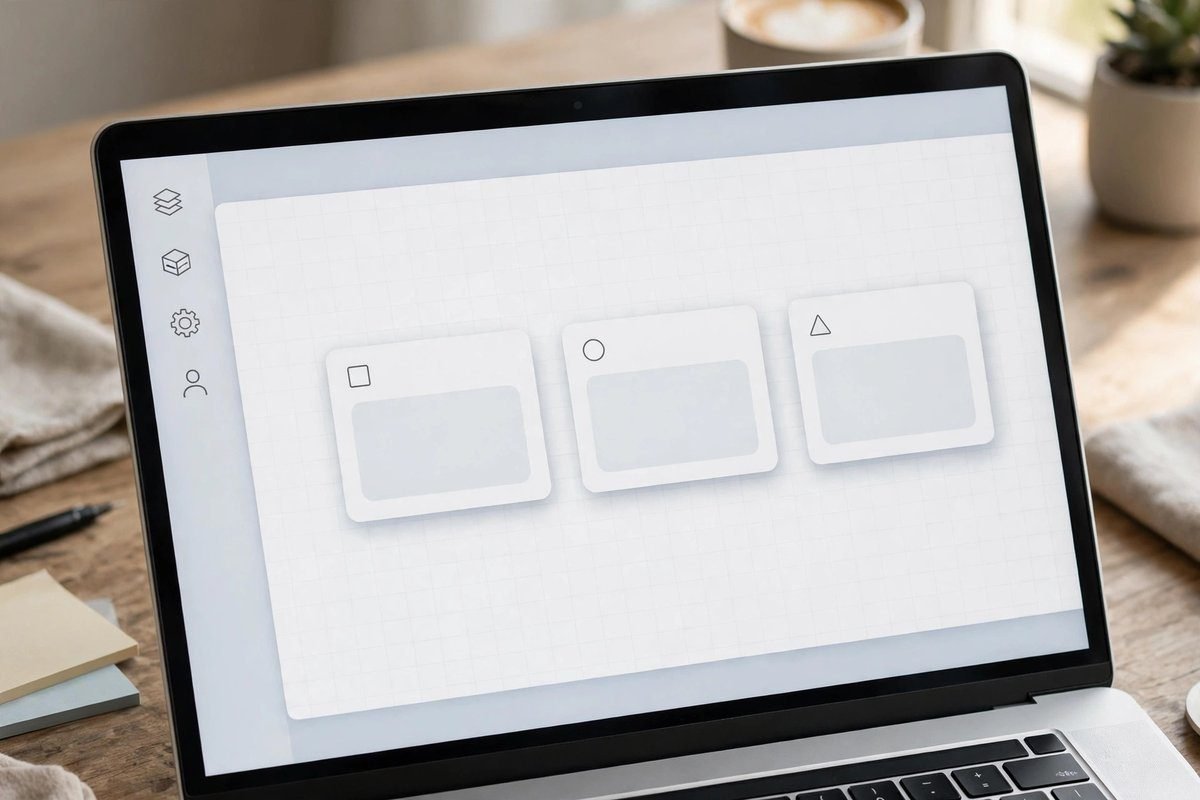
A local canvas workspace open in a browser, with a clean dashboard layout on your own computer.
What the Port Number 18789 Does
If 127.0.0.1 is the address of your computer itself, the port number is the detail that picks out one particular program among everything running on that computer. A single machine can run many programs at once, and several of them might each offer a small web interface. Without ports, your browser would have no way of knowing which program it is supposed to talk to.
A helpful comparison is an apartment building. The street address gets you to the right building, but you still need the apartment number to find the right door. In this comparison, 127.0.0.1 is the building and 18789 is the apartment number. When you visit the address with that port, your browser knocks on that specific door. If the program behind that door is running and listening, it answers. If nothing is listening on that port, the browser has nowhere to go, and you get an error page instead.
Port numbers are just numbers, and different programs use different ones. Some ports are well known because they are used for common services, but many programs choose a higher, less common number precisely to avoid clashing with something else on the same machine. The number 18789 falls into that category. It is not a standard port for everyday web browsing, which is actually a good thing, because it reduces the chance that another program on your computer is already using it.
The practical point is simple: the port must match. If the program on your machine is set to listen on a different port, then visiting port 18789 will fail even though the program itself is running perfectly well. This is one of the most common reasons a local page does not load, and it is also one of the easiest to fix once you know to check it. The port in the address and the port in the program’s settings must agree, digit for digit.
What the OpenClaw Canvas Path Suggests
After the address and the port comes the path: /__openclaw__/canvas/. A path works the same way it does on a normal website. It tells the program which page or section you want to see. Just as one website can have many pages, one local program can offer many different screens, and the path picks out one of them.
Breaking the path down, the middle part names the application, and the last part names the section. The double underscores around the word openclaw are a common convention in software: they mark out a special or internal section rather than an ordinary page. The word canvas at the end suggests a workspace, a blank or visual area where things are arranged, drawn, or worked on, rather than a plain settings page or a simple list.
Taken together, the path points to a canvas-style interface that belongs to a locally running OpenClaw setup. In other words, this is very likely the main working area of the program, delivered through your browser. That is a common pattern in modern tools. Instead of building a separate desktop window, the program runs quietly in the background and gives you a web page as its face. You get the convenience of a browser, with tabs, bookmarks, and familiar navigation, while the actual work still happens on your own machine.
It is worth being careful about what this does not tell you. The path alone does not reveal which exact features your installation has, how it was configured, or what you will see once the page loads. Different setups can look quite different behind the same address. So treat the path as a strong hint about what the page is for, a canvas workspace for a local OpenClaw instance, rather than a promise about specific buttons, menus, or tools. The reliable way to find out what your canvas offers is simply to open it, which brings us to the next section.
How to Open the OpenClaw Canvas in Your Browser
Opening the page is straightforward, and you do not need any special browser or extra software. Any modern browser will do, whether that is Chrome, Edge, Firefox, Safari, or another browser you already use. The steps below assume the program is already running on your computer, which is covered in more detail in the next section.
First, open your browser as you normally would. Click into the address bar at the top of the window, the same place where you would type a website name. Type the full address, including the port and the path, exactly as it was given to you, and then press Enter. There is no need to add anything extra before or after it, and you do not need to search for it in a search engine. A search engine will not understand a local address, and it cannot reach your computer anyway, so typing it directly into the address bar is the right approach.
If everything is running correctly, the browser will load the canvas page within a second or two. You should see the workspace appear, and from there you can use it like any other web page. If the page loads but looks plain or unfinished, give it a moment, since local pages sometimes take a second to settle. If the page does not load at all, do not worry. That is normal when something small is out of place, and the troubleshooting section later in this guide walks through the fixes in order.
A couple of small habits make this easier. If you use the canvas often, bookmark the address once it loads, so you can return to it with a single click instead of typing the numbers each time. Also, be careful when typing the address by hand. A single wrong digit in the port number, or a missing slash in the path, is enough to send your browser to the wrong place, and the error message you get will not always make the mistake obvious. Copying and pasting the address, where possible, avoids that problem entirely.

Opening a local address in a browser, with the program running on the same computer.
Before You Start: What Needs to Be Running First
This is the single most important thing to understand about a localhost address: the page only exists while the program behind it is running. A normal website lives on a server somewhere that stays switched on all day and night. A local page is different. It is served by a program on your own computer, and if that program is not running, there is simply nothing for your browser to connect to.
So before you try to open the canvas, make sure the OpenClaw program has been started on your machine. How you start it depends on how it was set up. On some machines it may start automatically when you log in. On others, you may need to launch it yourself from a shortcut, a start menu entry, or a command you were given when it was installed. If you are unsure, check whether the program is running by looking for its icon, its window, or its entry in your system’s list of running programs.
It also helps to check that the program is using the port you expect. Most local tools show this somewhere in their settings, their startup messages, or their documentation. If the program reports that it is listening on a different port, then that is the port you need in your browser address, not 18789. A mismatch here is a frequent cause of confusion, because everything looks correct except for one number, and the browser gives you a generic error that does not explain the mismatch.
Finally, remember that the program must be running on the same computer as the browser. This sounds obvious, but it trips people up more often than you might think. If you start the program on a desktop computer and then try to open the address on your phone or on a laptop, it will not work, because the address on each device points to that device itself. Keep the browser and the program on the same machine, and the address will behave as expected.
Why the Page Does Not Load: The Common Reasons
When a local page fails to load, the cause is almost always one of a small handful of everyday problems. Working through them in order saves a lot of guesswork, and in most cases the fix turns out to be simple.
The most common reason is that the program is not running. This happens after a restart, after an update, or simply because the program was closed and forgotten. Your browser cannot connect to something that is not there, so it reports that the connection was refused or that the site cannot be reached. The fix is to start the program again and then refresh the page.
The second common reason is the wrong port. As explained earlier, the port in the address must match the port the program is actually using. If the program was reconfigured, or if a different setup is running than the one you expected, the port may have changed. Double-checking the program’s settings or startup messages usually reveals the correct port quickly.
A third reason is your firewall. A firewall is a safety feature that controls which programs are allowed to accept connections, and it can sometimes block a local program, especially the first time it runs or after an update. The program may be running perfectly well, but the firewall stands in the way. This is usually fixed by allowing the program through the firewall when your system asks, or by checking the firewall settings for a blocked entry.
Browser cache is a fourth, quieter culprit. Browsers save copies of pages to load them faster next time, and occasionally a saved copy goes stale or gets mixed up with a newer version of the page. The result can be a blank page, a half-loaded page, or an old version of the workspace. A hard refresh, or clearing the cache for the local address, often clears this up straight away.
Finally, there is the simple possibility of a typo. Local addresses are long strings of numbers and slashes, and one mistyped character is enough to break them. If you typed the address by hand, compare it digit by digit with the address you were given before trying anything more complicated.
Step-by-Step Troubleshooting
If the canvas page is not loading, work through these steps in order. After each step, refresh the page in your browser and see whether it loads. There is no need to try everything at once, and in most cases one of the early steps solves the problem.
Start by confirming the program is running. Look for it in your system’s running programs or task list. If it is not there, start it, wait a few seconds for it to finish starting up, and then refresh the browser. Some programs take a little while before they are ready to answer, so a short wait after starting is worthwhile.
Next, check the port. Look at the program’s settings or startup messages and confirm it is listening on port 18789. If it shows a different port, update the address in your browser to match, and try again. If the port matches, move on.
Then, try a different browser, or a private browsing window in your current browser. This is a quick way to rule out cache and extension problems. If the page loads in a private window but not in a normal window, the cause is very likely cached data or a browser extension, and clearing the cache or disabling extensions one by one will narrow it down.
After that, check your firewall. If your system recently asked whether to allow the program and you declined, or if a recent update changed its permissions, the firewall may be blocking it. Allow the program through the firewall, restart it, and try the page again. If you are on a managed work computer, you may need to ask whoever manages it, since firewall settings are sometimes locked.
If the page still does not load, restart both the program and the browser. Close the browser completely, not just the tab, and restart the program fresh. This clears out temporary states on both sides and is surprisingly effective. As a last resort, restart your computer, which resets the network stack and any stuck background process in one go, then start the program again and open the address.
One more check is worth making if you share the machine or use more than one user account: make sure you are logged into the same account under which the program is running. A program started under one account may not be reachable in quite the same way from another, and switching to the right account can resolve a stubborn failure.
Working through a short checklist when a local page refuses to load.
Security Notes: Keeping a Local Service Local
A localhost address is private by design, and that is one of its main advantages. Because 127.0.0.1 never leaves your own computer, nobody on the internet can reach your canvas simply by knowing the address. The address means something different on every computer, so sharing it with someone else does not give them access to your workspace. That is a reassuring starting point, but there are still a few sensible habits worth following.
The most important rule is not to expose the local service to the wider network unless you fully understand what you are doing. Some tools offer options to listen on all network addresses instead of just localhost, or to forward a local port so it can be reached from outside. Those options change the safety picture completely, because the service would no longer be limited to your own machine. Unless you have a specific reason and you understand the risks, leave the service listening on localhost only.
It is also wise to keep the software up to date and to be careful about who can use your computer while the service is running. Anyone sitting at your unlocked computer could open the same address in a browser and reach the canvas, because localhost trusts the local machine. Locking your screen when you step away, and closing the program when you no longer need it, are simple habits that close that gap.
Finally, treat the canvas like any other workspace that may hold your work. If the program offers a way to back up or export what you create, use it from time to time. A local service is convenient, but it also lives and dies with your computer. A backup means a hardware problem or a fresh installation does not have to mean starting from scratch.
None of this is meant to alarm you. Used as intended, on your own machine, with the service left on localhost, this kind of setup is a normal and widely used way of running software. The security notes here are simply about not accidentally changing that setup into something more open than you intended.
Frequently Asked Questions
What is 127.0.0.1 in simple terms?
It is a special address that always means your own computer. When your browser visits 127.0.0.1, it connects to a program running on the same machine, not to a website on the internet. That is why it is often called localhost.
Why does the address include the number 18789?
That number is the port, and it tells your computer which program should answer. Many programs can run at once, so the port acts like a door number that directs your browser to the right one. The port in the address must match the port the program is actually using.
Why does the canvas page say it cannot be reached?
In most cases, the program behind the page is not running, the port does not match, a firewall is blocking it, or the browser has a stale cached copy. Working through those checks in order, starting with whether the program is running, fixes the problem most of the time.
Can someone else open my canvas using the same address?
No. The address points to each person’s own computer, so the same address on someone else’s machine leads to their computer, not yours. They would only reach your canvas if they were sitting at your computer, or if you had deliberately exposed the service beyond localhost, which you should not do without understanding the risks.
Do I need an internet connection to open a local canvas?
No, not for the local page itself, because everything happens on your own computer. You may still need an internet connection for other things, such as downloading the program in the first place or using features that reach outside services, but opening a page served by your own machine does not require being online.
Conclusion
An address like 127.0.0.1:18789 with the path /__openclaw__/canvas/ looks technical at first, but it breaks down into three friendly ideas. The first part is your own computer, the port number picks out the right program on that computer, and the path points to a canvas workspace inside that program. Once you see it that way, the whole thing feels far less mysterious.
The practical lesson is just as simple. Make sure the program is running on the same computer as your browser, use the correct port, and remember that the page only exists while the program is alive. Most loading problems come from one of those points, a firewall setting, a stale browser cache, or a small typo, and each of them has a straightforward fix.
Keep the service on localhost, lock your screen when you step away, and back up your work now and then, and you have a setup that is both convenient and private. The canvas is there when you need it, on your machine, under your control, and now you know exactly how to reach it.
Read Also: HTTP Error Roblox: Causes & Quick Fixes (2026 Guide)

Admin
Contributor at Daily Scope 67.
Related reading
192/16 Network Meaning and Subnet Guide (2026 Guide)
192/16 is shorthand for a large private network range. Here is what the /16 means, how many addresses it covers, and when you will meet it.
Read story
192.168.50.1 Router Login and Admin Setup (2026 Guide)
192.168.50.1 is the admin address for some routers and modems. Here is the full login guide, plus troubleshooting and security tips.
Read story
192.168.100 Router Login and Admin Setup (2026 Guide)
192.168.100 looks like a router address but it is missing a piece. Here is what it really means and the full address to use for your admin login.
Read story
1 comment