

In this article
In this article
- What the “AI Response Error: HTTP 504 Pax Historia” Message Actually Means
- What HTTP 504 Gateway Timeout Means in Plain Language
- Why AI Responses Are Especially Likely to Time Out
- Quick Fixes to Try First
- Deeper Fixes If the Error Keeps Coming Back
- How to Tell If the Problem Is on the Server Side
- How to Report the Error So It Actually Gets Fixed
- What Not to Do When You See This Error
- How to Reduce the Chances of Seeing It Again
- Frequently Asked Questions (FAQ)
- Conclusion
If you have just seen the message ai response error: http 504 pax historia on your screen, you are not alone, and in most cases it does not mean you did anything wrong. In plain terms, it means the AI feature tried to generate a reply for you, but the request took too long to travel through the servers behind Pax Historia, and the connection gave up before an answer came back. That is frustrating, especially when you were in the middle of a game session or waiting on a response you actually needed, but it is also one of the more fixable errors you can run into. This guide explains what the message means, why AI replies are more likely to hit this particular wall than a normal page load, and what to try — in order — before you assume the feature is broken for good.
What the “AI Response Error: HTTP 504 Pax Historia” Message Actually Means
Let us break the message down into its three parts, because each part tells you something useful.
“AI response error” simply means the failure happened while an AI-generated reply was being produced or delivered. It is not a message about your save file, your account, or your device in general. It is specific to that one AI request.
“HTTP 504” is a standard web error code. HTTP codes are the short status messages servers send back when a request succeeds, fails, or times out. A 504, specifically, is called a Gateway Timeout, which we will explain properly in the next section.
“Pax Historia” is the context: the game or app environment in which you saw the error. This article describes Pax Historia only in that generic sense — as the game or app context where an AI feature timed out. We are not claiming anything specific about its developer, its release history, or its full feature list, because none of that can be confirmed from the error message itself. What we can say with confidence is that you were using an AI feature inside Pax Historia when the request timed out.
Put together, the message is best read as: “Your AI request in Pax Historia timed out at a server gateway before a response could be returned.” That is the certain part. The exact reason it timed out on that particular occasion — a busy server, a slow network hop, an unusually long reply — cannot be known from your side alone, and any guide that pretends otherwise is guessing. The rest of this article separates what is certain from what is likely, so you can act on the first and test the second sensibly.
What HTTP 504 Gateway Timeout Means in Plain Language
Imagine you ask a question at a reception desk, and the receptionist has to pass it on to someone in another office to get your answer. If that second office takes too long to reply, the receptionist eventually has to come back and say, “Sorry, I waited, but I did not get an answer in time.” That is essentially what a 504 Gateway Timeout is.
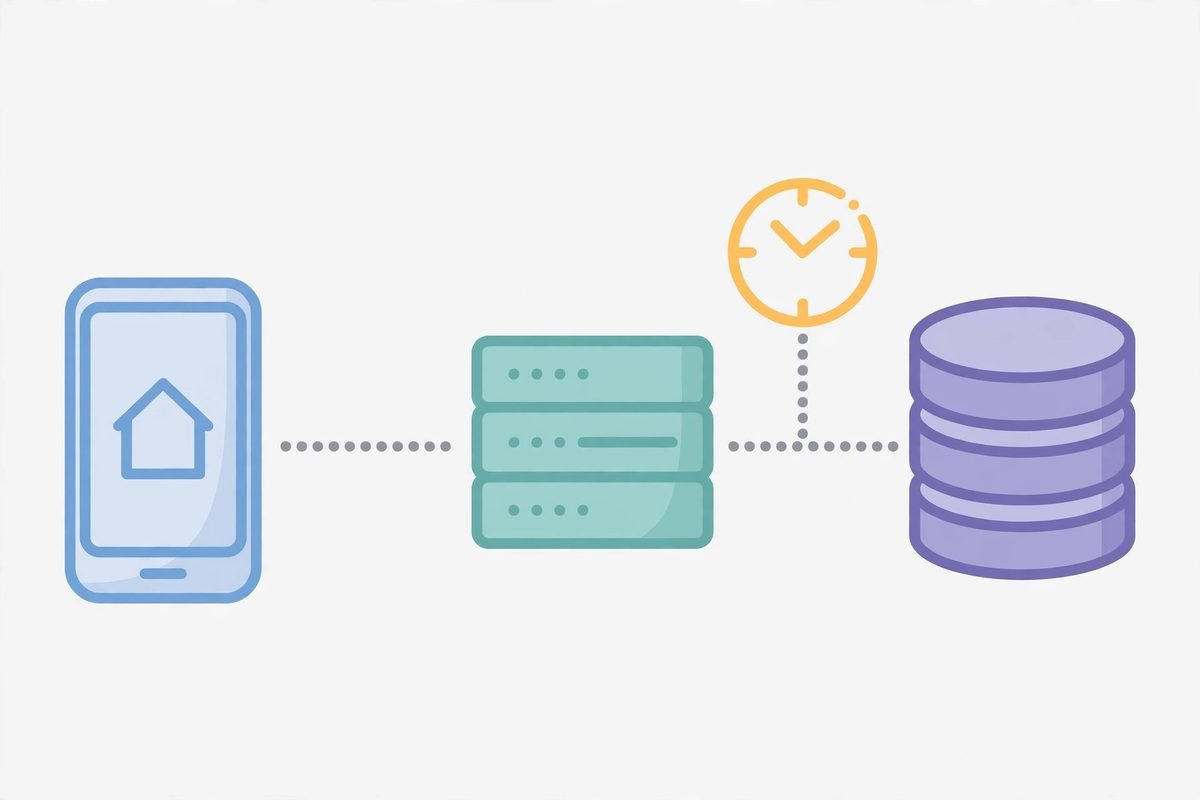
On the web, your device rarely talks to one single server. Your request usually passes through a gateway or proxy server first, which forwards it to another server that is supposed to do the actual work. If that second server does not respond quickly enough, the gateway gives up and sends back a 504. It does not mean the page or feature does not exist. It does not mean your account is blocked. It means a link in the chain was too slow on that attempt.
This is different from a few errors it is often confused with. A 404 means something was not found. A 403 means access was refused. A 500 means something went wrong on the server itself. A 504 is specifically about timing: something in the chain did not answer fast enough. That distinction matters, because it changes what you should try next. With a timeout, trying again — especially after a short pause, or with a simpler request — often works, because the next attempt may hit a less busy server or a faster path.
It is also worth knowing that a 504 can be temporary and one-sided. You might see it once and never again, or you might see it repeatedly during a busy period and then find everything works fine an hour later. A single 504 is almost never a reason to reinstall anything or change deep settings. Repeated 504s are a signal to work through the steps below methodically, rather than to keep hammering the same button.
Why AI Responses Are Especially Likely to Time Out
You might wonder why you can browse, log in, and play normally, but the AI feature in particular keeps timing out. There are a few honest, technical reasons for that, and they all come back to one fact: generating an AI response takes much longer than loading a normal page.
A normal page load is mostly a retrieval job. The server finds stored information and sends it to you, which usually takes a fraction of a second. An AI response is a generation job. The system has to process your prompt, run it through a model, and produce new text token by token. A short reply might take a few seconds. A long, detailed reply can take considerably longer, and the longer it takes, the closer it gets to whatever timeout limit sits on the gateway in front of it.
That creates a few predictable pressure points. First, long or complex prompts are more likely to time out than short ones, because they ask for more generation time. Second, busy periods make timeouts more likely, because many users are asking for AI responses at the same time and the backend has more work queued up. Third, any slowdown anywhere in the chain — your connection, an intermediate network route, or the AI backend itself — eats into the same time budget. The request does not have to fail outright; it just has to be slow enough, for long enough, to cross the limit.
This is also why AI timeouts can feel inconsistent. The same prompt might work in the morning and fail in the evening, or work on a short question and fail on a long one. That inconsistency is actually a clue. If the feature were simply broken, it would tend to fail the same way every time. If it fails more on long prompts and busy periods, time is very likely the main factor, and the fixes below are aimed squarely at that.
Quick Fixes to Try First
Start here. These steps are quick, safe, and they resolve a surprising number of one-off timeouts without touching any settings. Try them in order, and test the AI feature again after each one or two steps rather than doing everything at once, so you can tell what actually helped.
First, wait a moment and retry. This sounds too simple to count as advice, but with a timeout it is genuinely the best first move. Give it thirty seconds to a minute, then send the same request again. If the first attempt hit a momentary spike in load, the second attempt may sail through. If it fails again immediately, wait a few minutes before the next try rather than retrying ten times in a row, which only adds to the queue.
Second, try a shorter, simpler version of your request. If you asked a long, multi-part question, split it in half or ask the most important part first. You can always follow up once you have a reply. Shorter requests need less generation time, which directly reduces the chance of crossing a timeout limit. This one change alone often turns a repeated failure into a working conversation.
Third, refresh or restart the feature cleanly. Close the AI panel or chat window if you can, then reopen it. If you are playing in a browser, refresh the page once. If you are in an app, closing and reopening the app is the equivalent step. You are not trying to fix anything deep here; you are simply making sure you are not stuck on a stale, half-finished request from the failed attempt.
Fourth, check your own connection. A timeout is not always the server’s fault. If your connection is weak, dropping, or very slow at that moment, the reply may be taking too long to reach you even if the server did its part. Try loading another page or starting a quick video to gauge speed. If everything else is sluggish too, the problem is more likely local. Moving closer to your router, switching from mobile data to Wi-Fi (or the other way around), or simply waiting out a weak signal can all help.
The table below summarises these first moves so you can work through them without re-reading the whole section.
| Fix | What to do | When it helps most |
|---|---|---|
| Wait and retry | Pause 30–60 seconds, then send the request again | One-off timeouts during a busy moment |
| Shorten the request | Ask a shorter version, or split a long question in two | Long or complex prompts that keep timing out |
| Refresh or restart | Close and reopen the AI panel, refresh the page, or restart the app | A stuck or half-finished request after a failure |
| Check your connection | Test another page, switch networks, or improve your signal | Slow or unstable internet at your end |
| Try again later | Wait 15–30 minutes and retry during a quieter period | Repeated failures that suggest a busy backend |
If one of these works, you are done. There is no need to keep troubleshooting a problem that has already gone away. If the error keeps returning, move on to the deeper checks below.
Deeper Fixes If the Error Keeps Coming Back
When the same error appears again and again, it is time to rule out local causes more thoroughly. Work through these steps slowly, and test after each change.
Clearing your browser cache or the app’s temporary data is a reasonable next step, but do it with care. Cached files are meant to speed things up, yet a corrupted or outdated cache entry can interfere with how a feature loads. In a browser, clearing cached images and files for the site in question is usually enough; you do not need to wipe your entire history or saved passwords. In an app, the equivalent is clearing the cache from the app’s settings, if that option is available. Do not delete your save data or uninstall the game as a first resort — that is a much bigger step than a timeout error normally justifies, and it risks losing progress for a problem that may be server-side anyway.
Trying another device or another network is one of the most useful diagnostic steps you have, because it splits the problem in half. If the AI feature works on a different device on the same network, the issue is likely tied to your first device. If it works on the same device on a different network, the issue is likely tied to your connection. If it fails on both devices and both networks, the issue is very likely on the server side, and no amount of local tweaking will fix it. That knowledge alone can save you a lot of wasted effort.
Also check whether the problem is specific to one kind of request. Does a short greeting or a simple question go through, while a long story request always fails? Does it fail only at certain times of day? Patterns like these point back to generation time and server load, and they are worth noting if you end up reporting the issue. A vague report that says “it doesn’t work” is far less useful than one that says “short prompts work, long prompts time out every evening,” and the reporting section below explains how to capture that detail.
Finally, make sure the game or app itself is up to date, and that you are running a reasonably current version of your browser or device software. Updates sometimes include fixes for how requests are handled, and an outdated version can behave differently from the one the servers expect. This will not fix a genuinely overloaded backend, but it rules out a whole class of avoidable mismatches.
How to Tell If the Problem Is on the Server Side
There comes a point in troubleshooting where the most helpful answer is simply: this is not yours to fix. Recognising that point matters, because it stops you from changing settings that were fine in the first place.
The strongest sign of a server-side problem is that the error appears for many people at the same time, or that it appears regardless of device, network, and prompt length. If your friends or other players are reporting the same AI response error at the same time, or if you have tried two devices and two networks with the same result, the bottleneck is almost certainly upstream of you. Another strong sign is timing: if the feature worked yesterday, nothing changed on your device, and it suddenly fails for everyone this evening, that pattern fits a busy or struggling backend far better than a local fault.
In that situation, the correct response is patience plus a good report, not more drastic local steps. Repeatedly reinstalling, resetting network settings, or changing account settings will not speed up a server, and each change adds a new variable that makes the real cause harder to see. Wait, retry at intervals, and check the official status or community channels for Pax Historia if any are available to you. If there is an official announcement or a wave of similar reports, that confirms the picture. If there is no announcement, your report — done well — becomes part of the evidence that something needs attention.
How to Report the Error So It Actually Gets Fixed
If the error keeps happening and you have ruled out the obvious local causes, reporting it well is the single most useful thing you can do. Support teams and developers cannot fix a timeout they cannot reproduce or locate, so the details you include make a real difference.
A good report includes: what you were doing when the error appeared (for example, asking the AI feature a question inside Pax Historia); the exact error text you saw; whether short requests work while long ones fail; what device and network you were using; what time the failures happened; and what you already tried, including whether another device or network made any difference. Screenshots of the error message itself are helpful, provided they do not expose any private information.
Keep the report factual and concise. You do not need to diagnose the backend yourself or demand a particular fix. A clear description of the pattern — when it happens, how often, and under what conditions — gives the people who can see the server side exactly what they need to look for. If there is an in-game feedback option, an official support channel, or a community channel the developers actually read, use that route rather than relying on unofficial comment threads, where reports are easily lost.
And keep a note of what you sent. If the problem later clears up, or if support asks a follow-up question, having your own record of times, prompts, and steps tried will save you from starting over.
What Not to Do When You See This Error
A timeout error can be annoying enough to tempt you into shortcuts, and this is the section to read before you take any of them.
Do not download any unofficial “fix,” patch, optimiser, or modified version of the game that claims to resolve the error. A 504 is a server timing issue, not something a third-party download can repair, and unofficial downloads are a common way to pick up malware or compromise an account. If a fix does not come from the official game or its official support channels, treat it as untrustworthy, however convincing the page looks.
Do not share your account credentials, login codes, or personal details with anyone offering to fix the error for you. No legitimate troubleshooting step for a timeout requires your password. Anyone asking for it is not helping you, whatever they claim.
Do not repeatedly spam the retry button dozens of times in a row. Beyond being unlikely to help, it adds load to the very backend that is already struggling to answer in time. A few spaced retries are sensible. A flood of retries is not.
Do not assume your account has been banned or your progress lost just because you saw a 504. Nothing in this error code suggests that. Check the basics, try the steps above, and look for wider reports before drawing a worrying conclusion.
How to Reduce the Chances of Seeing It Again
You cannot eliminate server timeouts entirely — no user-side habit can guarantee that — but you can lower the odds of hitting one, especially if your failures tend to follow a pattern.
Favour shorter, focused prompts when you can, and build longer answers through follow-ups rather than asking for everything in a single huge request. If you know the feature struggles at certain busy times, and your request can wait, try it during a quieter period. Keep your connection as stable as you reasonably can while using the AI feature, and keep the game or app updated so you are not running a version with known request-handling quirks.
Most importantly, treat a single timeout as noise and a pattern as information. One failure on a busy evening is normal for a system that generates replies on demand. Repeated failures on long prompts, or failures that line up with wider reports, are worth a proper report. That mindset — retry calmly, note the pattern, report clearly — will serve you better than any single trick, because it matches how timeout errors actually behave.

Frequently Asked Questions (FAQ)
Does an HTTP 504 error mean Pax Historia is down?
Not necessarily. A 504 means one AI request timed out at a gateway. The rest of the game may be working perfectly well. If everything else is down as well, that points to a wider outage, but a 504 on the AI feature alone is more often a timeout on that specific backend path than a full outage.
Will retrying the exact same prompt eventually work?
Often, yes, if the cause was a momentary spike in load. Give it a short pause and try again. If the same long prompt fails repeatedly, though, do not just keep resending it unchanged — shorten it or split it first, because generation time may be the very thing pushing it over the limit.
Is the error caused by my internet connection?
It can be, but it is not the only cause. A slow or unstable connection can contribute to a timeout, which is why checking your connection and trying another network are useful diagnostic steps. If the error persists on a fast, stable connection and on another device, the cause is more likely server-side.
Should I reinstall the game to fix an AI response error: HTTP 504?
In almost all cases, no. Reinstalling is a large step for a timing error, and it will not fix an overloaded backend. Try the quick and deeper fixes in this guide first, and only consider reinstalling if you have clear evidence the problem is specific to your installation — for example, if the feature works everywhere except on that one device after all other steps have been tried.
Can a longer prompt really cause a timeout?
Yes, and this is one of the more reliable patterns with AI features. Longer replies take longer to generate, and every extra second brings the request closer to the gateway’s timeout limit. That is why shortening or splitting a request is such an effective first troubleshooting step.
What information should I include when reporting this error?
Include the exact error text, what you were asking the AI feature to do, whether short prompts work while long ones fail, your device and network type, the times the failures occurred, and what you have already tried. That pattern — not just “it doesn’t work” — is what helps the people on the server side find and fix the cause.
Conclusion
Seeing the ai response error: http 504 pax historia message is irritating, but it is also informative once you know how to read it. The certain part is simple: a gateway timed out while waiting for an AI response. The likely part — a long generation, a busy backend, or a slow link in the chain — can usually be tested with the steps in this guide: wait and retry, shorten the request, check your connection, and, if the pattern persists, report it clearly rather than chasing unofficial fixes. In many cases the error will clear on its own as load eases. When it does not, a calm, well-documented report does more good than any drastic local change. Try the short-prompt approach first next time, note whether the pattern repeats, and you will usually know within a few minutes whether you are dealing with a passing timeout or a problem worth reporting.
Read Also: ANL Luxury Real Estate Advisor: Your Premier Gateway to Milan’s Exclusive Property Market

Admin
Contributor at Daily Scope 67.
Related reading

192/16 Network Meaning and Subnet Guide (2026 Guide)
192/16 is shorthand for a large private network range. Here is what the /16 means, how many addresses it covers, and when you will meet it.
Read story
192.168.50.1 Router Login and Admin Setup (2026 Guide)
192.168.50.1 is the admin address for some routers and modems. Here is the full login guide, plus troubleshooting and security tips.
Read story
192.168.100 Router Login and Admin Setup (2026 Guide)
192.168.100 looks like a router address but it is missing a piece. Here is what it really means and the full address to use for your admin login.
Read story
1 comment