
In this article
If you typed 192.168.12..231 into your browser and nothing happened, you are not doing anything wrong in a complicated way. You have just hit one of the most common little typing mistakes in home networking, and it is an easy one to fix once you see it.
That address, with two dots in a row, is not a valid IP address, so no browser and no router will know what to do with it. The address you almost certainly meant is 192.168.12.231, with a single dot between each set of numbers. That small difference matters, because an IP address has a strict format, and anything outside that format simply does not resolve.
This guide starts there, with the typo, because that is where most people get stuck. Then it moves on to what 192.168.12.231 actually is, when it works as a router login address, and how to use it to open your router’s admin panel.
You will also find a clear step-by-step login walkthrough, practical advice for changing your Wi-Fi name and password, a few sensible security habits, and troubleshooting steps for the times the page refuses to load or the login does not work. Nothing here assumes you are technical. If you can open a browser and type an address, you can follow this.
In this article:
- Why 192.168.12..231 Will Not Open
- What Is 192.168.12.231?
- Before You Try to Log In
- How to Log In to Your Router at 192.168.12.231
- Changing Your Wi-Fi Name and Password
- Simple Security Settings Worth Checking
- What to Do If the Page Will Not Load
- How to Find Your Actual Gateway Address
- Common Login Problems and How to Fix Them
- Frequently Asked Questions
- Conclusion
Why 192.168.12..231 Will Not Open
An IPv4 address, which is the familiar four-number format used by most home routers, is made up of four groups of numbers separated by single dots. Each group is called an octet, and there are exactly four of them. So 192.168.12.231 fits the pattern: 192, then a dot, then 168, then a dot, then 12, then a dot, then 231.
The version with two dots, 192.168.12..231, has an empty group in the middle. There is nothing between those two dots, and that breaks the whole address.
Your browser treats it the same way it would treat a misspelled website name. It tries to make sense of it, fails, and usually shows a search results page, an error page, or a message saying the site cannot be reached.
That does not mean your router is broken, your internet is down, or the address itself is fake. It just means the input was not valid, so the request never even left your device in a useful form.
This kind of typo is easy to make, especially on a phone keyboard where the dot key sits close to other keys, or when you are copying an address quickly from a sticker, a note, or someone else’s message.
It is also easy to miss when you glance at it, because two dots close together can look like one at a small font size. If you have been trying the double-dot version again and again, stop and retype it carefully as 192.168.12.231, checking each dot as you go. In many cases, that alone solves the problem.
It is worth making one more distinction here. Fixing the typo does not guarantee that 192.168.12.231 is the right address for your particular router. It only makes the address valid.
Whether it opens your router’s login page depends on whether your router actually uses that address as its gateway. We will come back to that in a moment, and later in this guide you will learn how to check your real gateway address on your own device, so you are not guessing.
What Is 192.168.12.231?
192.168.12.231 belongs to a range of addresses reserved for private networks. Private here does not mean secret or hidden in a mysterious way. It means the address is meant to be used inside a local network, like the network in your home or small office, rather than on the public internet.
Your router hands out private addresses to the devices connected to it, and it usually keeps one private address for itself so you can reach its settings page. That self-address is often called the default gateway, because it is the doorway your devices use to get out to the internet through the router.
Some routers and modems use 192.168.12.231 as that gateway address. Others use a different address entirely, and that is completely normal. There is no single universal router address that works for every brand and model.
That is why guides that promise one address for all routers can be misleading. If your network was set up with 192.168.12.231 as the gateway, then typing it into a browser on a device connected to that network should bring up a login screen.
If your router uses something else, typing this address will either do nothing, time out, or possibly open a different device on your network, which is another reason to confirm your gateway before you spend too long troubleshooting.
You do not need to memorise how private addressing works to use it. The practical point is simple: 192.168.12.231 is a local address. It only works when you are connected to the network that uses it, and it is not something you would type in to reach a website on the wider internet.
If you are on mobile data, or on a different Wi-Fi network, it will not take you to your home router. You need to be on the right network first, which brings us to the preparation steps.
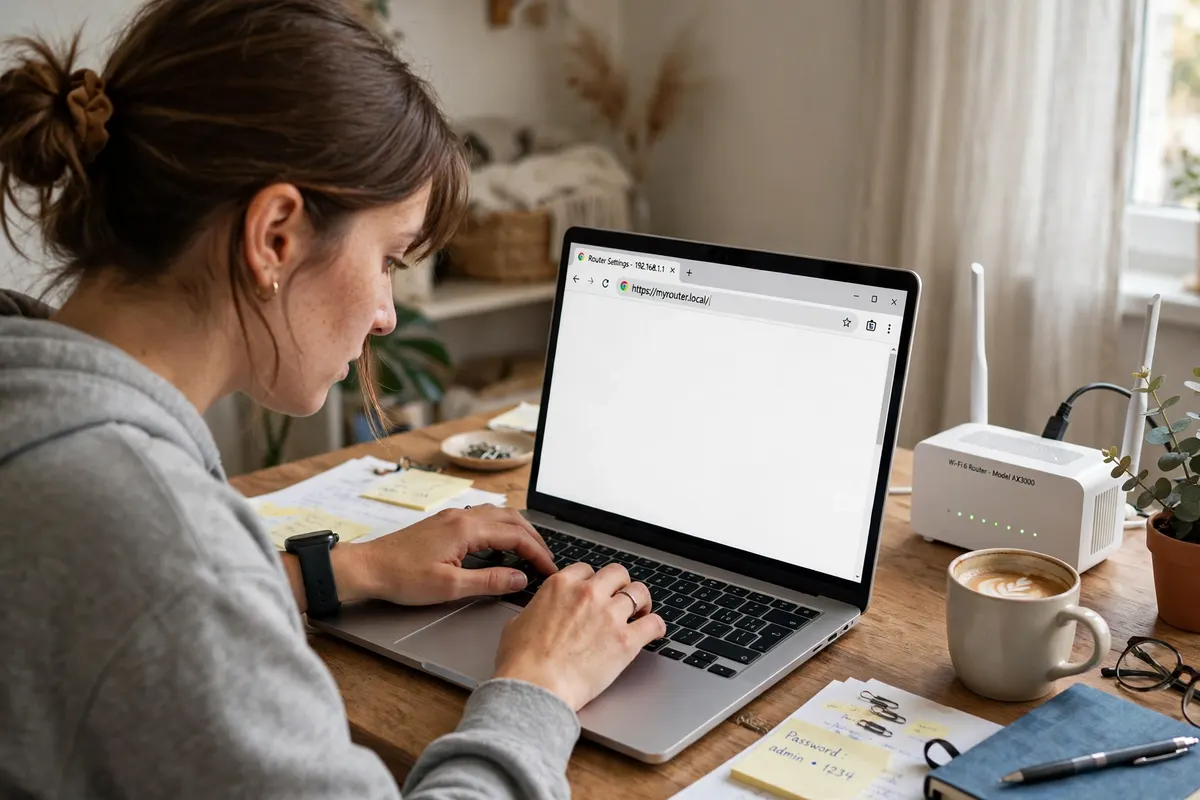
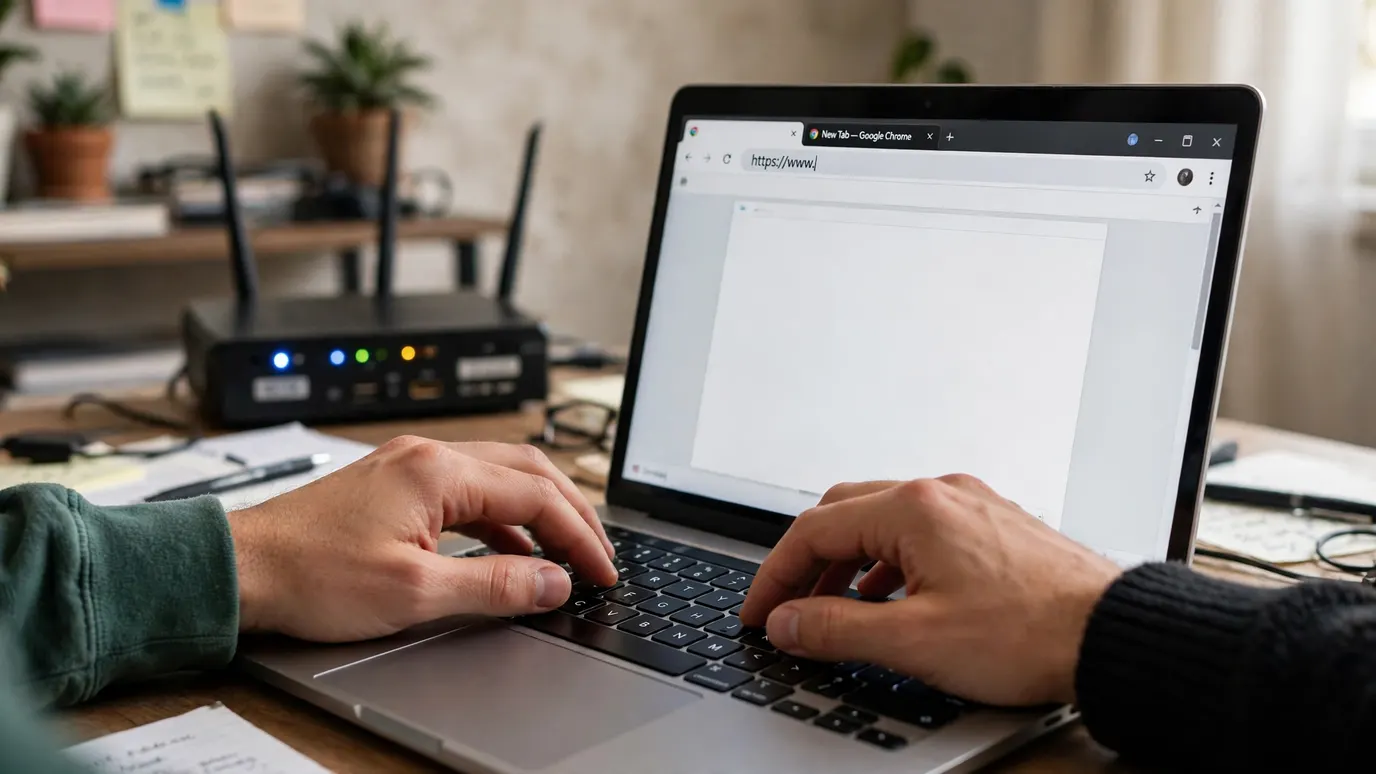
A person typing 192.168.12..231 carefully into a laptop browser address bar, with a home router visible nearby
Before You Try to Log In
A couple of minutes of preparation can save a lot of frustration. First, make sure the device you are using is connected to the router you want to manage. That usually means connecting to its Wi-Fi network, or plugging in an Ethernet cable if you have one handy.
A wired connection is often the most reliable option for admin work, because it removes Wi-Fi signal problems from the equation, but Wi-Fi works fine for most people as long as the signal is stable.
Second, find your router’s label. Most routers have a sticker on the bottom or the back with useful information printed on it. That label often shows the default gateway address, the default Wi-Fi network name, and the default login details for the admin panel.
Defaults vary by brand and model, so do not rely on a username and password you saw in a random post online. The label on your own router is the trustworthy source. If the label is worn out or missing, the manual that came with the router, or the manufacturer’s support pages for your exact model, are the next best places to look.
Third, have a pen and paper or a notes app nearby. You may want to write down your current Wi-Fi name and password before you change anything, just in case you need to reconnect a device later.
If you change the Wi-Fi password, every device on that network will need the new password, so it helps to know in advance which devices will need updating. That includes phones, laptops, smart TVs, printers, and smart home gadgets, which people often forget until they suddenly go offline.
Finally, use a regular browser on a device you trust, and avoid logging into your router admin panel on a public or shared network. The admin panel controls your home network, so it deserves the same basic caution you would give to any account that controls something important.
How to Log In to Your Router at 192.168.12.231
Here is the straightforward process, step by step. Take it slowly the first time, and do not worry if a step takes a few seconds to respond.
Step 1: Connect to your router’s network. Join its Wi-Fi network or connect an Ethernet cable between your computer and the router. Confirm you are connected by checking that your device shows a Wi-Fi or wired connection, not just mobile data.
Step 2: Open your browser. Any modern browser will do. Click into the address bar at the top, not the search box on a homepage, and clear anything that is already there.
Step 3: Type the address correctly. Type http://192.168.12.231 and press Enter. You can usually leave off the http:// part and just type 192.168.12.231, because the browser will add it for you.
The important thing is the numbers and the single dots: 192, dot, 168, dot, 12, dot, 231. Double-check before you press Enter, especially if you have had trouble with the double-dot typo before.
Step 4: Wait for the login page. If this is the right gateway for your router, you should see a login screen asking for a username and password. It may look plain compared with a normal website, and that is fine. Router login pages are usually simple by design.
Step 5: Enter the admin username and password. Use the details printed on your router’s label, if you have never changed them. If you changed them in the past and cannot remember the new ones, you will need to recover or reset them, which is covered in the troubleshooting section below.
Do not confuse the admin password with your Wi-Fi password. They are two different things, even though they both relate to your router. The Wi-Fi password lets a device join the network. The admin password lets someone change the router’s settings.
Step 6: Look around before you change anything. Once you are in, take a moment to notice the layout. The settings you are most likely to need, such as wireless settings, are usually under a heading like Wireless, Wi-Fi, or Network Settings, though the exact wording varies by brand.
If you only came in to change the Wi-Fi name or password, head straight there and ignore the more advanced sections for now. Changing settings you do not understand can cause more problems than it solves, so it is better to change one thing at a time and save as you go.
Step 7: Save and test. After you make a change, look for a Save, Apply, or OK button on that page and click it. Some routers restart or briefly drop the connection after a Wi-Fi change, which is normal. Reconnect with the new details if needed, and check that your device gets back online.
If something does not work as expected, you can log back in and review what you changed while it is still fresh in your mind.
That is the whole login flow in normal circumstances. Most problems people run into are not about the steps themselves, but about one of three things: the wrong address, the wrong network, or the wrong login details. The sections below deal with each of those in turn.
Changing Your Wi-Fi Name and Password
Changing your Wi-Fi name, often called the SSID, and your Wi-Fi password is one of the most common reasons to open the admin panel, and it is a good habit if you are still using a default name and password that anyone nearby could guess or look up.
It is also useful after moving house, after giving the password to a lot of visitors, or simply when you want a name that is easier to recognise.
Start by logging in as described above, then find the wireless settings section. You will usually see separate settings for the 2.4 GHz and 5 GHz bands, if your router offers both.
You can set the same name and password for both, or different ones, depending on what suits your household. Using the same name for both is simpler, because your devices can pick the band that works best for them, but some people prefer separate names so they can choose manually. Either approach is fine for everyday use.
When you choose a new Wi-Fi name, pick something recognisable but not personally revealing. A name that includes your full name, address, or flat number tells neighbours more than they need to know. Something neutral and memorable is a better choice.
For the password, length matters more than cleverness. A longer password made of words you can remember, with a mix of letters and numbers, is generally stronger and easier to live with than a short string of random symbols you will have to look up every time a guest asks.
After you save the new settings, your devices will disconnect from the old network name, or will fail to connect with the old password. That is expected.
Go to each device, forget the old network if it is still listed, select the new name, and enter the new password. Smart home devices and printers sometimes need to be set up again through their own apps, so allow a little extra time for those.
If a device refuses to connect, double-check that you typed the password exactly, including capital letters, because Wi-Fi passwords are case-sensitive.
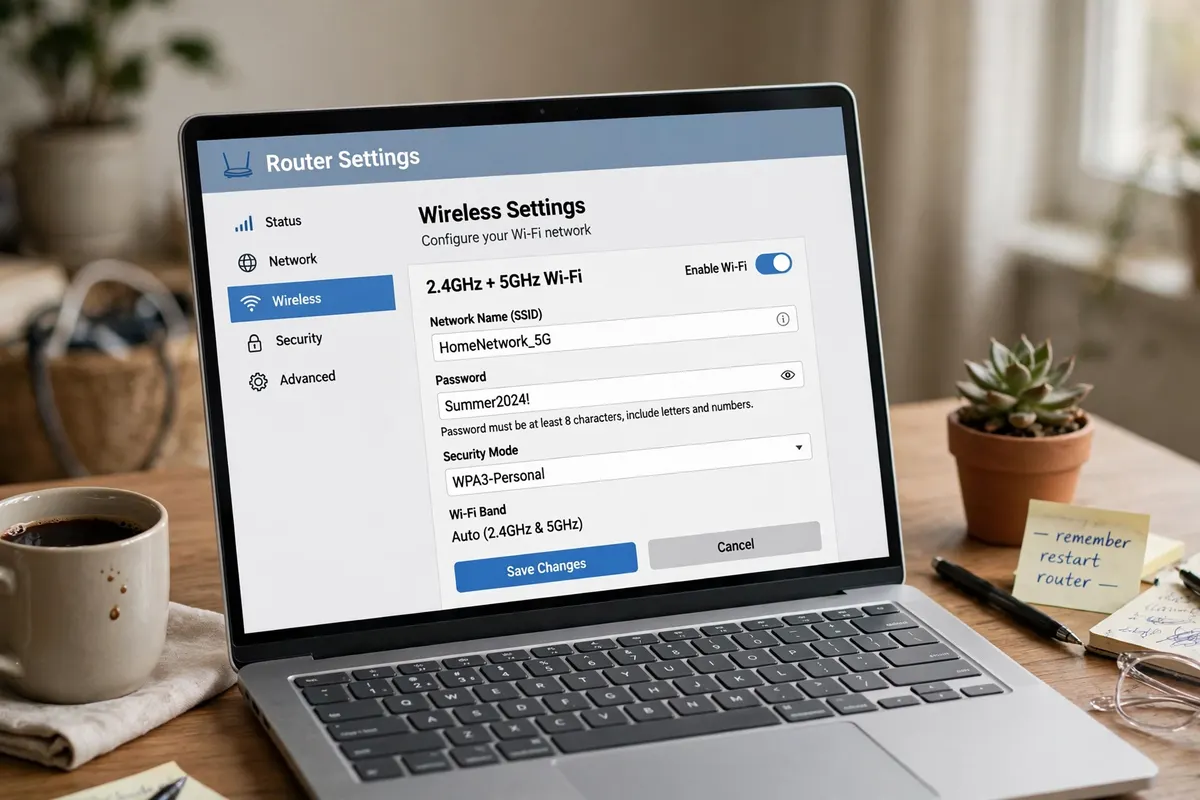
A router settings screen showing the wireless network name and password fields being updated
Simple Security Settings Worth Checking
You do not need to become a security expert to make your home network reasonably safe, and a few basic checks in the admin panel go a long way. The first is the admin password itself.
If you are still using the default admin login printed on the label, and you have never changed it, consider changing it to something only you know. The default is convenient, but it is also the same for many units of the same model, which means it is not a secret in any real sense.
A changed admin password keeps casual visitors to your network from wandering into the settings.
The second check is your Wi-Fi encryption setting. In the wireless settings, look for a security or authentication option. Modern routers offer strong encryption options, and you should pick the strongest one your router and devices support.
If you see an option that sounds very old, or an option that says security is off or open, that is a sign to change it. If you are unsure which option is right for your router, the manual or the manufacturer’s guidance for your model is a safer source than a general tip online, because the best choice can depend on the age of your devices.
A third habit is keeping the router’s firmware reasonably up to date. Firmware is the software that runs inside the router, and manufacturers release updates from time to time.
Some routers update automatically, while others need you to check for updates in the admin panel or download them manually. If your router has an update option, check it occasionally, and follow the manufacturer’s instructions rather than interrupting an update halfway through.
An interrupted firmware update can leave a router in a bad state, so only start one when you have a stable connection and a few minutes to spare.
Finally, think about who has access. If you have given your Wi-Fi password to a long list of people over time, changing it and sharing the new one only with people who need it is a simple reset.
For guests, many routers offer a separate guest network, which lets visitors get online without giving them access to your main network and its shared devices. If your router has that feature and you have frequent visitors, it is worth turning on.
What to Do If the Page Will Not Load
A page that will not load is frustrating, but it usually has a small number of causes, and working through them in order is more effective than trying random fixes. Start with the address itself.
Retype 192.168.12.231 slowly, checking for the double-dot typo, extra numbers, spaces, or a letter that slipped in where a number should be. Common mix-ups include typing a letter O instead of the number 0, or adding an extra digit at the end.
It is also worth checking that you typed the address into the browser’s address bar, not into a search engine box that then searches the web for that string instead of opening it as an address.
Next, check your connection. Are you actually connected to the router’s network? If your phone switched to mobile data because the Wi-Fi signal was weak, the local address will not work. Turn mobile data off temporarily, or make sure Wi-Fi is on and connected to the right network, then try again.
If you are on Wi-Fi and the signal is poor, moving closer to the router or trying a wired connection can rule out a signal problem.
Then try a different browser, or the same browser in a private or incognito window. Occasionally a browser extension, a saved redirect, or cached data interferes with a local address.
A private window bypasses most extensions and cached data for that session, which makes it a useful test. Clearing the browser cache is another option, though it will sign you out of websites, so the private window test is usually the quicker first step.
Restarting your devices is also worth trying, in the right order. Restart your computer or phone first, and if that does not help, restart the router by unplugging it, waiting about thirty seconds, and plugging it back in.
Give the router a minute or two to fully start up before you try the address again. Routers, like any small computer, can occasionally get into a state where they need a fresh start.
If none of that works, the most likely explanation is that 192.168.12.231 is simply not your router’s gateway address. That is not a failure on your part. It just means your router uses a different address, and the next section shows you how to find the right one on your own device instead of guessing.
How to Find Your Actual Gateway Address
Finding your gateway address takes less than a minute on most devices, and it removes all the guesswork. On a Windows computer, you can open a command prompt and run the ipconfig command, then look for the Default Gateway entry under your active connection.
That number is the address your computer uses to reach the router, and typing it into a browser should open the login page if the router’s web interface is enabled.
On a Mac, you can find the same information in System Settings under Network, by selecting your connection and looking at the router entry. On an Android phone, it is usually under the Wi-Fi settings for the network you are connected to, in the advanced or details view, where it may be labelled Gateway or Router.
On an iPhone, tap the connected Wi-Fi network, and look for the Router field in the details. The exact labels and menus vary by device and software version, but the idea is the same everywhere: your device already knows the gateway, so you can read it off rather than searching the web for it.
Once you have that number, type it carefully into your browser and see if the login page appears. If the gateway turns out to be a different address, use that one from now on and forget about 192.168.12.231 for this router.
If the gateway is 192.168.12.231, then you have confirmed that your earlier problem was the typo, the connection, or the login details, not the address itself, and you can focus your troubleshooting there.
It is also worth noting that some networks are managed by an internet provider’s equipment or a mesh system, and the gateway you find may point to a device whose login page looks different from what you expected. That is still the right place to start.
If you are renting or using provider equipment, the provider’s own instructions for your equipment are the best guide to its login details and settings layout.
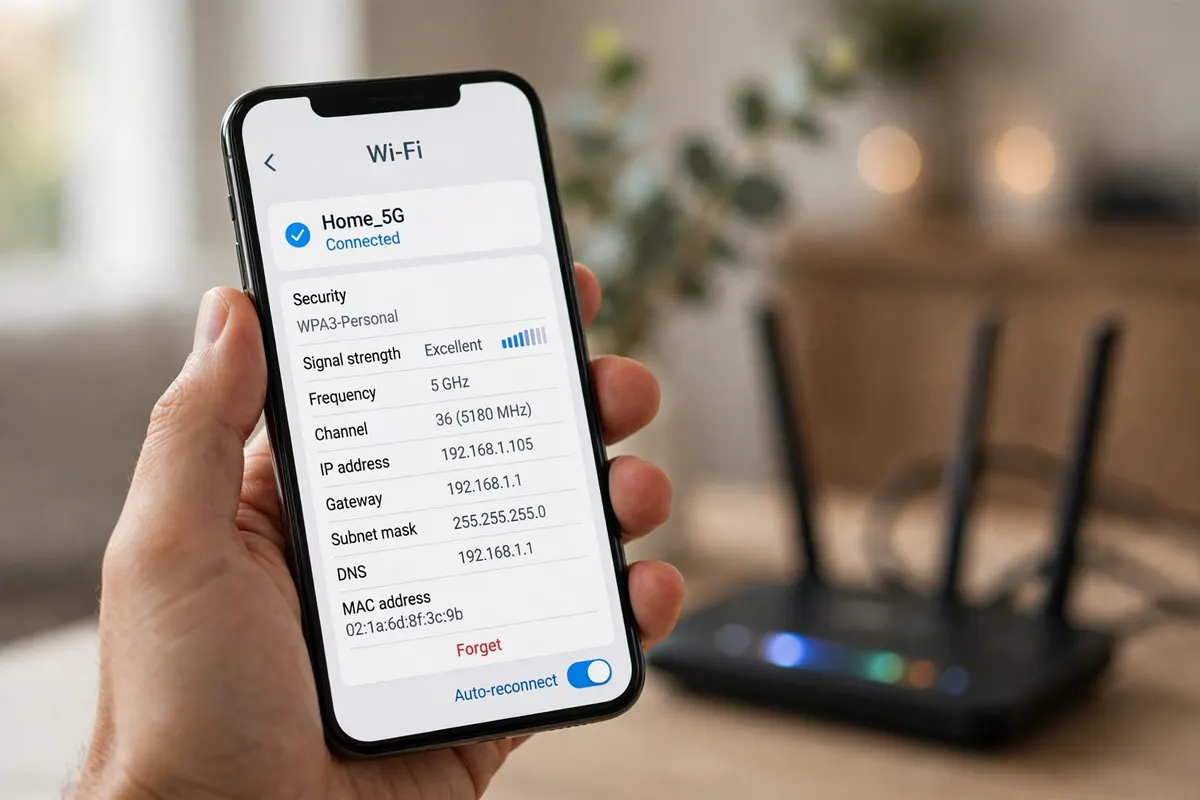
A phone Wi-Fi settings screen highlighting the gateway or router address field
Common Login Problems and How to Fix Them
Even with the right address, login problems happen, and most of them have a plain explanation. The most common is entering the wrong admin username or password.
Remember that the admin login is not the same as the Wi-Fi password, and it is case-sensitive. If you are copying from the router label, check each character, especially ones that look alike, and make sure caps lock is off.
If someone else set up the router, ask them whether they changed the admin password, because that is a frequent source of confusion.
Another common problem is a browser that keeps showing an old page or an error instead of the login screen. This can happen if the browser cached a failed attempt.
Trying a private window, a different browser, or clearing the cache for that address can help. A security warning about the connection is also possible with local addresses, because routers often use a self-signed certificate rather than one from a public authority.
Browsers may warn you that the connection is not private. This is a known quirk of local admin pages. If you are certain you are on your own home network and you typed the address yourself, you can usually proceed past the warning through the browser’s advanced option, but you should never enter admin credentials on a page you reached through a suspicious link or on an unfamiliar network.
If you have genuinely forgotten a changed admin password, and the label defaults no longer work, the usual last resort is a factory reset. Most routers have a small reset button, often recessed so you need a pin or paperclip to press it, which you hold for a set number of seconds as described in the manual.
A factory reset restores the default settings, including the default login from the label, but it also wipes your Wi-Fi name, password, and any custom settings, so you will need to set the router up again afterwards.
Treat it as a last resort, not a first step, and only do it if you are prepared to reconfigure the network.
There is also the case where the login page loads, you enter the correct details, and nothing happens, or you are sent back to the login screen. This can be caused by a browser issue, a router that needs a restart, or a session problem.
Try a different browser, restart the router, and try again. If the problem persists across browsers and after a restart, check the manufacturer’s support information for your model, because it may be a known issue with that firmware version.
Finally, if you can log in but cannot find a setting you expected, do not assume you are in the wrong place. Admin panels vary a lot between brands, and some features are hidden under different headings, or only appear in an advanced view.
Use the search function inside the admin panel if it has one, or check the manual for your model to see where that setting lives. Changing a setting in the wrong section because it has a similar name is a common way to create a new problem while trying to fix an old one.
Frequently Asked Questions
Is 192.168.12..231 a real IP address?
No. The double dot creates an empty section, so it does not fit the format for an IP address. Browsers cannot open it. The intended address is almost certainly 192.168.12.231, with a single dot between each group of numbers.
Is 192.168.12.231 the login address for every router?
No. Some routers and modems use it as their gateway, but many use a different address. The only reliable way to know is to check your router’s label or look up the default gateway on a device connected to your network.
Why does 192.168.12.231 only work at home?
Because it is a private, local address. It points to a device on your own network. When you are on mobile data or another network, that address does not point to your home router, so the login page will not appear.
What is the difference between the admin password and the Wi-Fi password?
The Wi-Fi password lets devices join your wireless network. The admin password lets someone log into the router’s settings page and change how the network works. They are separate, and changing one does not automatically change the other.
I forgot my admin password. What should I do?
First, try the default login printed on your router’s label, in case it was never changed. If that does not work and you cannot recover the changed password, a factory reset will restore the defaults, but it will also erase your custom settings, so you will need to set the router up again.
The page loads but says the connection is not private. Is that normal?
For a local router page, it can be. Routers often use a self-signed certificate, which browsers flag. If you typed the address yourself on your own home network, this warning is a known quirk. Do not enter credentials if you arrived at the page through an unfamiliar link or network.
Conclusion
The story of 192.168.12..231 is, in the end, a story about a tiny typo with an outsized effect. Two dots where there should be one are enough to stop a browser in its tracks, and that can make a simple task feel like a technical failure when it is nothing of the kind.
Once you correct it to 192.168.12.231, check that you are on the right network, and confirm that this is actually your router’s gateway, the rest of the process is straightforward: open the login page, sign in with the details from your router’s label, change only what you need to change, save, and test.
If 192.168.12.231 turns out not to be your gateway, that is useful information too, not a dead end. Find your real gateway on your device, use that address instead, and you will be back on track.
And if you take one habit away from this guide, make it this: when a router address will not open, check the address character by character before you assume something bigger is wrong. More often than not, the fix is already in front of you, hiding in plain sight between two dots.
Read Also: 192.168.1.254 Router Login and Admin Setup (2026 Guide)

Admin
Contributor at Daily Scope 67.
Related reading
192/16 Network Meaning and Subnet Guide (2026 Guide)
192/16 is shorthand for a large private network range. Here is what the /16 means, how many addresses it covers, and when you will meet it.
Read story
192.168.50.1 Router Login and Admin Setup (2026 Guide)
192.168.50.1 is the admin address for some routers and modems. Here is the full login guide, plus troubleshooting and security tips.
Read story
192.168.100 Router Login and Admin Setup (2026 Guide)
192.168.100 looks like a router address but it is missing a piece. Here is what it really means and the full address to use for your admin login.
Read story
1 comment